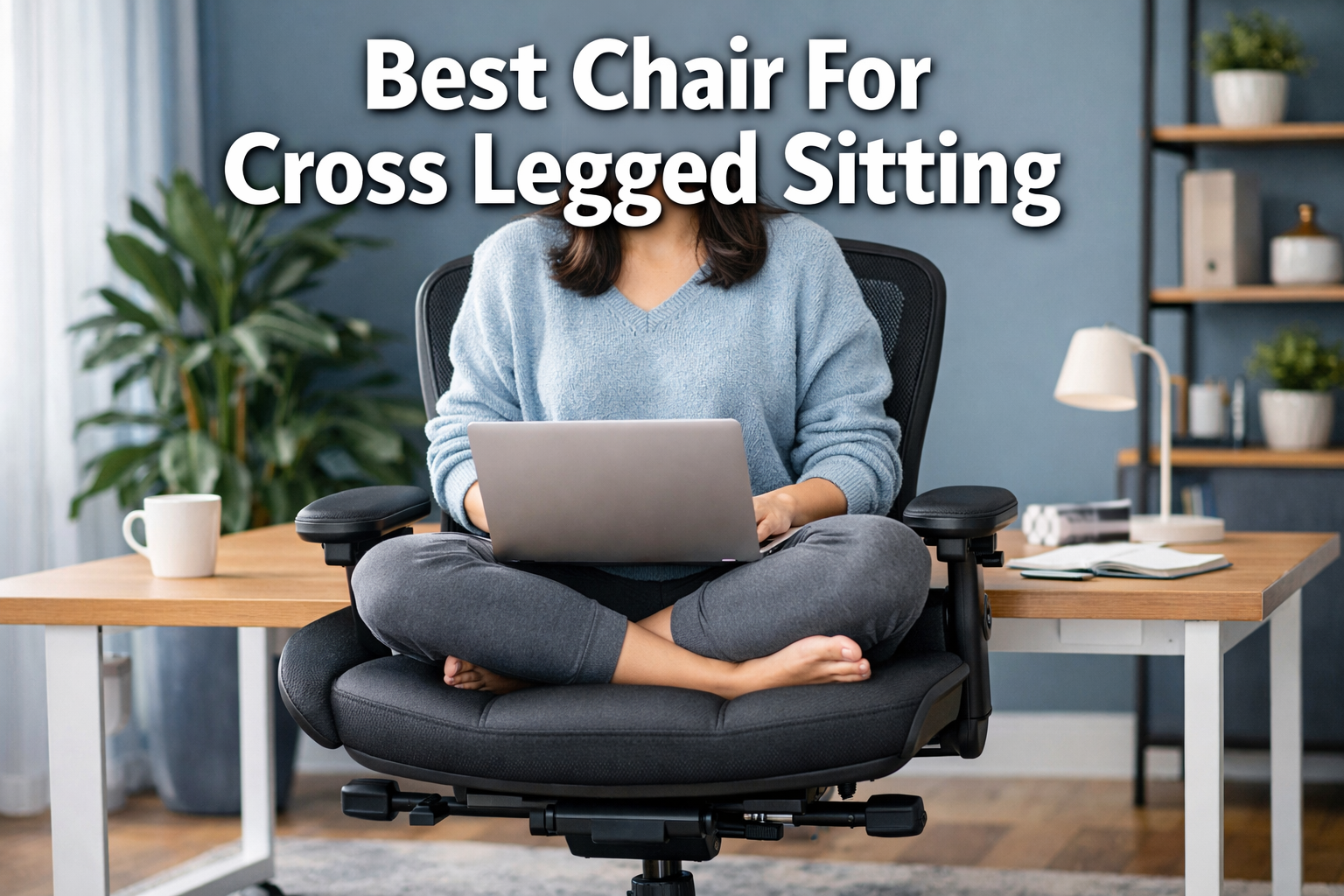
Best Chair For Cross Legged Sitting
Last updated: February 26, 2026
Sitting cross-legged at work isn’t just a habit, it’s your body signaling that traditional office chairs aren’t meeting your comfort needs.
The Best Chair For Cross Legged Sitting features an extra-wide, armless design with a seat depth of at least 45-50 cm, waterfall edges to prevent knee pressure, and forward tilt capability to maintain proper posture while accommodating alternative sitting positions.
Key Takeaways
- Cross-legged sitting chairs require armless designs with seat widths of 20+ inches to accommodate leg positioning without interference
- Waterfall seat edges reduce pressure on knees and thighs, preventing circulation issues during extended cross-legged sessions
- Forward tilt mechanisms and adjustable seat depth (45-50 cm range) help maintain spinal alignment when sitting cross-legged
- Budget options start around $57-$120, while premium ergonomic models range from $300-$735
- Alternating between cross-legged and traditional sitting positions maximizes health benefits and reduces strain
- Wide-seat chairs support multiple postures including cross-legged, kneeling, and squatting for dynamic movement
- Proper cross-legged chairs include breathable materials and cushioning that distributes weight evenly across hips
Quick Answer
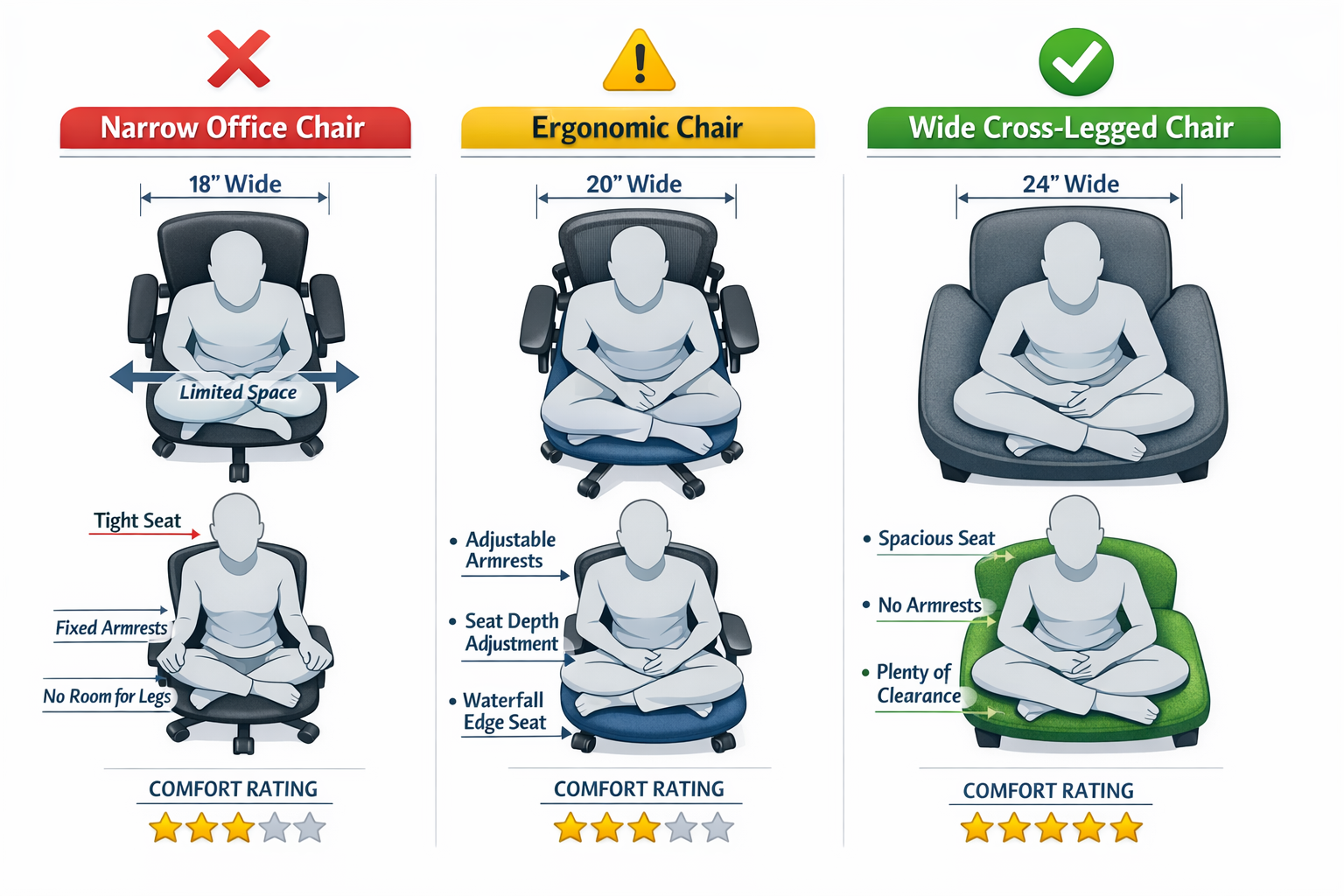
The Best Chair For Cross Legged Sitting combines an extra-wide armless seat (20+ inches), waterfall edges, and adjustable depth to accommodate folded legs without restricting circulation or forcing poor posture.
Models like the Eurotech Vera, Boulies EP460, and budget-friendly Celtoss Criss Cross offer the space and ergonomic features needed for comfortable alternative sitting positions.
These chairs support workplace wellness by enabling natural posture variation throughout the workday, reducing the health risks associated with static sitting.
Click For Latest Price and Best Deals
What Makes a Chair Suitable for Cross-Legged Sitting?
A chair designed for cross-legged sitting must provide adequate space, proper edge design, and flexibility that traditional office chairs lack. The fundamental requirement is an armless or removable-arm design with a seat width of at least 20 inches—significantly wider than standard office chairs that measure 17-19 inches.
Key design elements include:
- Extra-wide seat pan: Minimum 20-inch width to accommodate folded legs without compression
- Waterfall edge design: Curved front edge that slopes downward to reduce pressure on knees and thighs
- Adjustable seat depth: 45-50 cm range allows customization for different leg lengths and positions
- Forward tilt capability: Helps maintain natural spine curvature when sitting cross-legged
- Low or removable armrests: Prevents interference with knees and allows unrestricted leg movement
- Quality cushioning: Firm yet supportive foam that doesn’t create hard pressure points
The seat surface should be firm enough to support your weight evenly across your hips and sitting bones, not so soft that you sink into the chair and lose postural support. Materials matter—breathable mesh or quality fabric prevents heat buildup during extended sitting sessions.
Common mistake: Choosing a chair based solely on width without considering edge design. Even a wide chair with traditional hard edges will create uncomfortable pressure points behind your knees when sitting cross-legged.
Why Do People Prefer Cross-Legged Sitting at Work?
Cross-legged sitting addresses fundamental discomfort with static, traditional sitting positions that dominate office environments. Research indicates that approximately 40% of office workers naturally shift to cross-legged positions after 90 minutes of conventional sitting, signaling the body’s need for postural variety.
Benefits that drive this preference:
- Natural comfort: Cross-legged positions feel instinctively comfortable and reduce lower back strain for many people
- Posture variation: Changing positions throughout the day prevents muscle fatigue and stiffness
- Active engagement: The position requires subtle core engagement, promoting better awareness of body alignment
- Cultural familiarity: Many individuals grew up sitting cross-legged and find it more natural than feet-on-floor positioning
- Fidget accommodation: Allows movement-oriented workers to shift and adjust while remaining seated
The psychological component matters too. Cross-legged sitting can create a sense of groundedness and focus that enhances concentration during deep work sessions. For those who practice meditation or yoga, the position carries over familiar comfort into the workspace.
Choose cross-legged chairs if: You naturally shift to alternative positions during long work sessions, experience discomfort in traditional chairs after 60-90 minutes, or have a movement-oriented work style that benefits from postural flexibility.
For workers seeking comprehensive ergonomic support beyond sitting positions, exploring chairs that support better posture can provide additional insights into maintaining spinal health throughout the workday.
What Are the Top Features to Look for in Cross-Legged Sitting Chairs?
Selecting the best chair for cross-legged sitting requires evaluating specific features that directly impact comfort and long-term usability. These characteristics separate genuinely functional designs from chairs that merely claim to accommodate alternative positions.
Essential Features Checklist
Seat Dimensions
- Width: 20-22 inches minimum
- Depth: Adjustable from 18-20 inches
- Thickness: 3-4 inches of quality foam
Edge and Surface Design
- Waterfall front edge with gentle slope
- No hard plastic edges or frames that contact legs
- Breathable upholstery (mesh, quality fabric, or perforated leather)
Adjustment Capabilities
- Seat height range: 16-21 inches from floor
- Forward tilt: 0-5 degrees
- Backrest recline: 95-135 degrees for position variety
- Lumbar support: Adjustable height and depth
Structural Elements
- Armless design or flip-up/removable arms
- Stable base with smooth-rolling casters
- Weight capacity: 250-300+ pounds for durability
- Quality construction that prevents wobbling
Bonus Features
- Memory foam or gel-infused cushioning
- Breathable mesh backrest for temperature regulation
- Headrest for reclined positions
- Swivel function for easy desk access
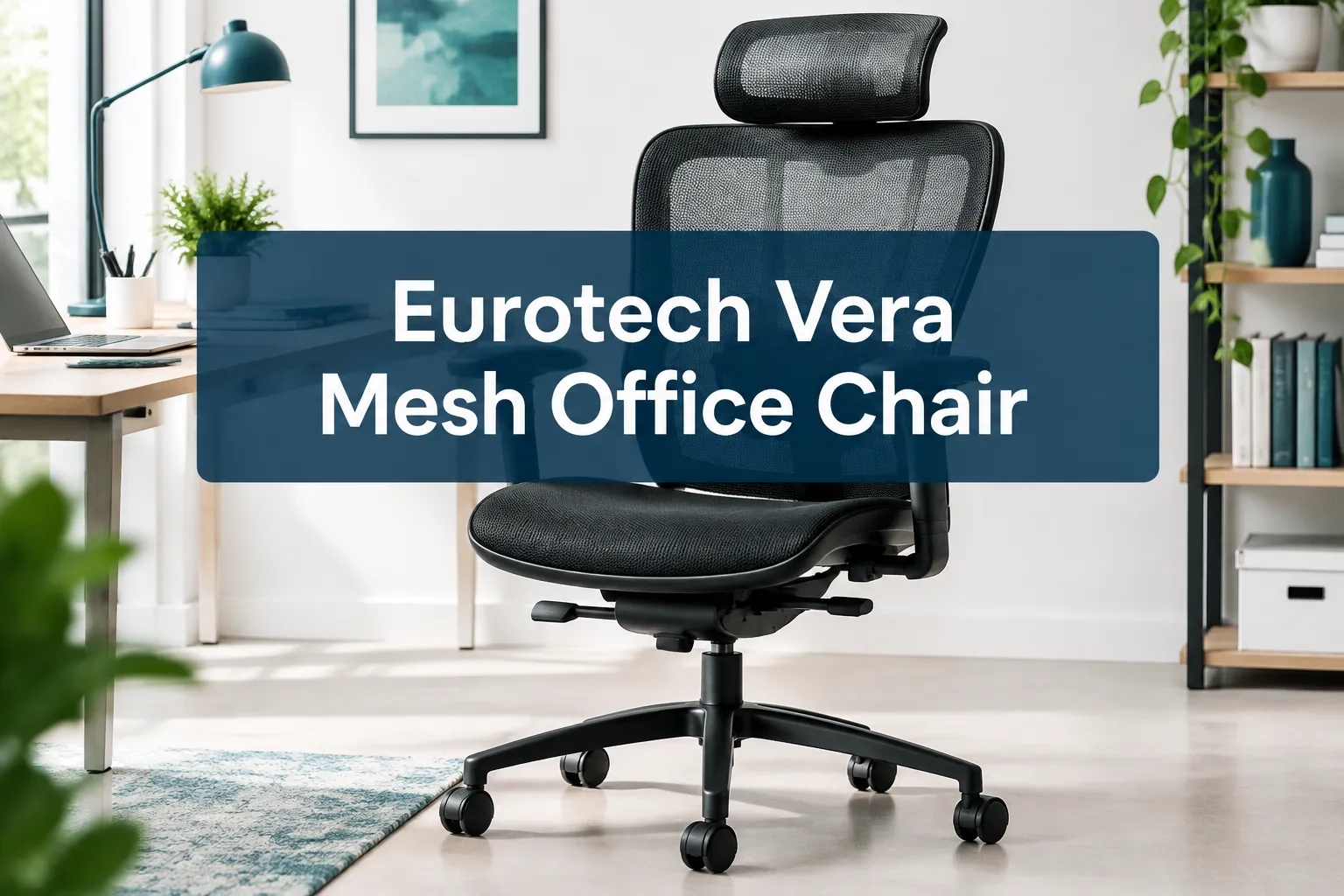
The Eurotech Vera model exemplifies these features with backward-positioned armrests that avoid knee interference, quality foam seating without hard edges, and forward tilt capability—all at a mid-range price point of approximately $500.
Edge case: Very tall individuals (6’3″+) may need chairs with deeper seat pans (21+ inches) to prevent their knees from extending past the seat edge when cross-legged. Conversely, shorter users under 5’2″ benefit from shallower depths to maintain back contact with lumbar support.
How Do Cross-Legged Chairs Compare to Traditional Office Chairs?
Cross-legged sitting chairs represent a fundamental departure from traditional office chair design philosophy, prioritizing movement flexibility over fixed ergonomic positioning. Understanding these differences helps determine which approach suits individual work styles and health needs.
| Feature | Traditional Office Chair | Cross-Legged Sitting Chair |
|---|---|---|
| Seat Width | 17-19 inches | 20-22+ inches |
| Armrests | Fixed, height-adjustable | Absent or removable |
| Sitting Position | Feet on floor, 90° angles | Multiple positions supported |
| Edge Design | Flat or minimal curve | Pronounced waterfall edge |
| Primary Focus | Static ergonomic positioning | Dynamic movement and variety |
| Price Range | $150-$1,200+ | $57-$735 |
| Best For | Traditional desk work | Movement-oriented workers |
Traditional ergonomic chairs excel at supporting the “correct” sitting position, feet flat, knees at 90 degrees, back supported. They enforce this posture through design elements like fixed armrests, structured seat pans, and rigid lumbar support systems.
This approach works well for workers who maintain consistent positioning and don’t experience discomfort with conventional sitting.
Cross-legged chairs sacrifice some traditional ergonomic structure for positional freedom. They acknowledge that the “best” sitting position is the next one, encouraging users to shift between cross-legged, traditional, kneeling, and other positions throughout the day.
Performance considerations: Traditional chairs typically offer more granular adjustments (armrest height, width, angle; precise lumbar positioning). Cross-legged chairs trade adjustment complexity for spatial freedom and movement accommodation.
Workers experiencing lower back pain may find that alternating between both chair types throughout the day provides optimal relief, combining structured support with movement variety.
What Are the Best Budget Options for Cross-Legged Sitting?
Quality cross-legged sitting chairs don’t require premium pricing. Several budget-friendly options deliver the essential features needed for comfortable alternative sitting positions, though they may lack advanced adjustments found in higher-end models.
Top Budget Picks Under $150
Celtoss Criss Cross Home Office Chair ($57 on sale, regularly $120)
- Extra-wide armless seat design
- U-shaped ergonomic cushioning for hip support
- Breathable fabric upholstery
- Basic height adjustment
- Best for: Home office workers prioritizing affordability and basic cross-legged comfort
VIVO Ergonomic Wide Seat Chair ($90-$110)
- 21-inch wide seat pan
- Mesh backrest for breathability
- Standard tilt mechanism
- Simple assembly
- Best for: Budget-conscious buyers needing reliable daily use
LEMBERI PU Leather Wide Office Chair ($100-$130)
- Waterfall edge design
- Easy-clean synthetic leather
- 360-degree swivel
- Moderate cushioning
- Best for: Users wanting low-maintenance materials with cross-legged space
What You Sacrifice at Budget Levels
Lower-priced chairs typically compromise on:
- Adjustment range: Limited or absent seat depth, tilt lock, and lumbar customization
- Material quality: Thinner foam padding, basic fabric that may wear faster
- Weight capacity: Often rated for 225-250 pounds vs. 300+ for premium models
- Longevity: 1-3 year expected lifespan vs. 5-10 years for premium chairs
Decision rule: Choose budget options if you work from home part-time (under 4 hours daily), have a secondary traditional chair for position variety, or want to test cross-legged sitting before investing in premium models.
For comprehensive comparisons of budget-friendly seating, review our guide to affordable office chairs for comfort.
What Premium Features Do High-End Cross-Legged Chairs Offer?
Click For Latest Price and Best Deals
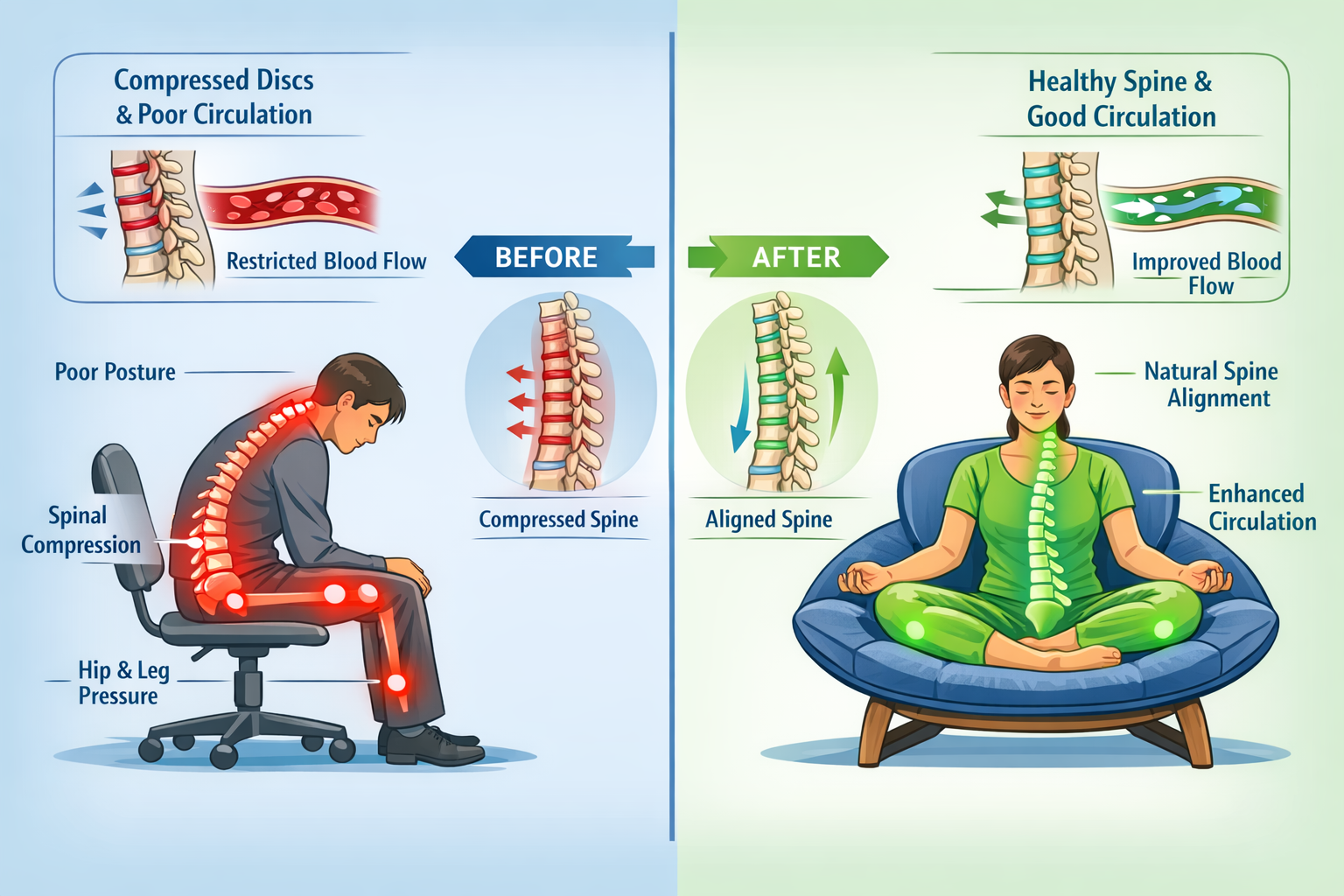
Premium cross-legged sitting chairs justify their higher price points through superior materials, extensive adjustability, and long-term durability that budget models cannot match. These investments pay dividends for full-time office workers spending 6-8+ hours daily at their desks.
Premium Model Highlights
Boulies EP460 ($300-$400)
- Adjustable seat depth: 45-50 cm range
- Three-level backrest positioning
- Waterfall edge with pressure-relief design
- High-density foam that maintains shape over years
- Comprehensive 5-year warranty
Eurotech Vera ($499.99)
- Forward tilt mechanism for posture support
- Backward-positioned armrests avoiding knee interference
- Quality foam without hard edge frames
- Breathable mesh backrest
- Professional-grade construction
Herman Miller Sayl ($735)
- Advanced suspension backrest technology
- Precise lumbar adjustment
- Premium materials and finishes
- 12-year warranty
- Designed for all-day comfort across positions
Steelcase Amia ($1,205)
- Extensive adjustment capabilities
- Live lumbar support that moves with you
- Superior weight distribution
- Commercial-grade durability
- Lifetime warranty on mechanisms
Premium Advantages
High-end chairs deliver value through:
- Biomechanical engineering: Designs based on extensive research into human movement and posture
- Material longevity: Premium fabrics, metals, and foams that resist wear for 7-10+ years
- Adjustment precision: Granular control over seat depth, tilt tension, lumbar position, and armrest placement
- Warranty coverage: 5-12 year warranties vs. 1-2 years for budget options
- Resale value: Premium brands maintain 40-60% of original value in secondary markets
Choose premium if: You work full-time from a desk (40+ hours weekly), have experienced chronic discomfort in standard chairs, or view your chair as a long-term health investment comparable to a quality mattress.
Those requiring specialized ergonomic support may also benefit from exploring comfortable ergonomic office chairs that combine traditional support with modern flexibility.
Are There Health Risks Associated with Cross-Legged Sitting?
While cross-legged sitting offers benefits through postural variety, prolonged use in any single position—including cross-legged—can create health concerns. Understanding these risks enables workers to maximize benefits while minimizing potential harm.
Potential Health Concerns
Circulation Issues
- Extended cross-legged sitting can compress blood vessels in legs
- May cause temporary numbness, tingling, or “pins and needles”
- Risk increases when sitting on hard surfaces without proper cushioning
- Mitigation: Switch positions every 30-45 minutes, use chairs with quality cushioning
Postural Strain
- Slouching tendency when cross-legged without proper back support
- Potential for uneven hip alignment if favoring one leg-crossing direction
- Lower back strain if lumbar support isn’t maintained
- Mitigation: Use chairs with adjustable lumbar support, alternate leg-crossing sides
Joint Stress
- Knee and ankle joints held in flexed positions for extended periods
- Hip flexor tightness from sustained folded position
- Potential aggravation of existing knee or hip conditions
- Mitigation: Incorporate standing breaks, perform desk stretches
Pelvic Floor Considerations
- Certain cross-legged positions may increase pelvic floor pressure
- Particularly relevant for individuals with pelvic floor dysfunction
- Mitigation: Consult healthcare providers if experiencing related symptoms
Evidence-Based Recommendations
Ergonomics experts recommend the position rotation approach: spending no more than 30-45 minutes in any single sitting position before shifting. Ideal rotation includes:
- Traditional sitting (feet flat): 30-40 minutes
- Cross-legged position: 20-30 minutes
- Standing (if desk allows): 10-15 minutes
- Alternative position (kneeling, perching): 10-15 minutes
This approach maximizes the benefits of postural variety while preventing the risks of static positioning in any single posture.
Common mistake: Assuming cross-legged sitting is inherently healthier than traditional sitting. The health benefit comes from variation, not from any single position being superior.
Workers dealing with specific conditions like sciatica should review specialized guidance on chairs for sciatica relief before committing to cross-legged sitting as a primary position.
How Can You Transition to Cross-Legged Sitting Comfortably?
Switching to cross-legged sitting requires gradual adaptation, particularly for workers accustomed to traditional sitting positions. A structured transition approach prevents discomfort and builds the flexibility and core strength needed for comfortable alternative positioning.
4-Week Transition Plan
Week 1: Assessment and Preparation
- Test cross-legged sitting for 10-15 minute intervals
- Note any discomfort areas (hips, knees, lower back)
- Begin basic hip and hamstring stretches daily
- Research chair options matching your needs
Wk 2: Short Sessions
- Increase cross-legged intervals to 20-25 minutes
- Alternate with traditional sitting every 30 minutes
- Practice maintaining upright posture without slouching
- Adjust chair settings (height, tilt) for optimal comfort
Week 3: Extended Practice
- Build to 30-40 minute cross-legged sessions
- Experiment with different leg-crossing variations
- Incorporate standing breaks between position changes
- Fine-tune lumbar support and seat depth
Wk 4: Integration
- Establish natural rotation pattern between positions
- Identify which tasks work best in cross-legged position
- Monitor any persistent discomfort requiring adjustment
- Commit to final chair selection based on experience
Flexibility Exercises for Cross-Legged Comfort
Hip Openers (perform 2x daily)
- Butterfly stretch: 30 seconds, 3 sets
- Pigeon pose: 30 seconds each side
- Hip circles: 10 rotations each direction
Hamstring Stretches
- Seated forward fold: 30 seconds
- Standing toe touch: 20 seconds, 3 sets
Core Strengthening
- Seated pelvic tilts: 15 reps
- Cat-cow stretches: 10 cycles
Decision rule: If you experience sharp pain (not mild stretching discomfort) during cross-legged sitting after 2-3 weeks of gradual practice, consult a healthcare provider before continuing. Some individuals with hip or knee conditions may not be suitable candidates for regular cross-legged sitting.
For additional movement strategies during work hours, explore our guide to simple office stretches for relief.
What Alternative Sitting Solutions Complement Cross-Legged Chairs?
The best workspace setup often includes multiple seating options that support different tasks, energy levels, and comfort needs throughout the day. Complementary alternatives to cross-legged chairs create a comprehensive dynamic sitting environment.
Multi-Posture Chair Options
Pipersong Meditation Chair
- Supports cross-legged, kneeling, squatting, and traditional positions
- Unique design accommodating 7+ sitting variations
- Higher price point ($400-$600) but maximum flexibility
- Best for: Workers who frequently shift positions and value movement variety
Soul Seat
- Mounted on casters for office mobility
- Encourages active sitting with balance engagement
- Supports multiple alternative positions
- Approximately $1,278—premium investment
- Best for: Active sitters who want movement integrated into seating
Kneeling Chairs
- Promotes upright posture through angled seat design
- Reduces lower back pressure by distributing weight to shins
- Not suitable for all-day use but excellent for 30-60 minute intervals
- Price range: $80-$400
- Best for: Alternating with cross-legged sitting for posture variety
Standing Desk Integration
Combining a cross-legged sitting chair with a height-adjustable desk creates the ultimate flexibility:
- Sit-stand rotation: Alternate between cross-legged sitting (30 min), standing (15 min), traditional sitting (30 min)
- Task-based positioning: Stand for calls and collaborative work, sit cross-legged for focused deep work
- Energy management: Stand during afternoon energy dips, sit during high-concentration tasks
For workers interested in standing alternatives, our guide to standing desk chairs provides detailed insights into hybrid sitting-standing solutions.
Creating a Dynamic Workspace
Optimal setup includes:
- Primary cross-legged sitting chair for focused work
- Traditional ergonomic chair for structured tasks
- Standing desk capability (converter or full desk)
- Floor mat for standing comfort
- Footrest for traditional sitting position variety
This multi-modal approach acknowledges that no single chair or position serves all needs throughout an 8-hour workday. The investment in variety pays returns through reduced fatigue, better focus, and long-term musculoskeletal health.
Edge case: Small home offices with limited space can achieve similar benefits through a single high-quality adjustable chair paired with a desktop standing converter, providing position variety without requiring multiple furniture pieces.
Click For Latest Prices and Best Deals
FAQ
What is the ideal seat width for cross-legged sitting?
The minimum seat width for comfortable cross-legged sitting is 20 inches, though 21-22 inches provides more spacious accommodation. Standard office chairs measure 17-19 inches wide, which restricts leg positioning and creates pressure points when attempting to sit cross-legged.
Can cross-legged sitting improve posture?
Cross-legged sitting can support better posture when done correctly with proper lumbar support and awareness of spinal alignment. However, it can also encourage slouching if the chair lacks adequate back support or if held for extended periods without position changes.
Are armless chairs necessary for cross-legged sitting?
Armless designs are strongly preferred because traditional armrests interfere with knee positioning when legs are folded. Some chairs feature backward-positioned or removable armrests that avoid this interference, but completely armless designs offer the most freedom for various leg positions.
Do cross-legged chairs help with lower back pain?
Cross-legged sitting can reduce lower back pain for some individuals by promoting natural spinal curvature and engaging core muscles. The best approach combines multiple positions throughout the day.
What’s the difference between a meditation chair and a cross-legged office chair?
Meditation chairs typically sit lower to the ground, often lack wheels, and prioritize floor-based sitting positions. Cross-legged office chairs include standard office features like height adjustment, swivel bases, and casters while providing the extra width needed for folded legs at desk height.
What’s the best cross-legged chair for working from home?
For home office use, the Boulies EP460 ($300-$400) offers excellent value with adjustable seat depth, quality construction, and features supporting both cross-legged and traditional positions. Budget-conscious home workers can consider the Celtoss Criss Cross ($57-$120) for part-time use.
Conclusion
The Best Chair For Cross Legged Sitting transforms workplace comfort by accommodating natural movement patterns that traditional office chairs restrict.
Key selection criteria include extra-wide armless seats (20+ inches), waterfall edge design, adjustable depth (45-50 cm), and quality cushioning that supports extended use without creating pressure points.
Budget options like the Celtoss Criss Cross ($57) provide entry-level functionality for home workers and those testing cross-legged sitting preferences.
Mid-range chairs such as the Boulies EP460 ($300-$400) and Eurotech Vera ($500) deliver professional-grade features with long-term durability.
Premium models like Herman Miller Sayl ($735) offer maximum adjustability and commercial-grade construction for full-time office use.
The health benefits of cross-legged sitting come not from the position itself, but from the postural variety it enables. Alternating between cross-legged, traditional, standing, and other positions every 30-45 minutes prevents the musculoskeletal strain associated with static sitting while maintaining focus and productivity.
Next Steps:
- Assess your current sitting habits and identify discomfort patterns
- Measure your workspace to ensure chair width compatibility
- Test cross-legged sitting for 10-15 minute intervals to gauge comfort
- Select a chair matching your budget and daily usage hours
- Implement a position rotation schedule alternating sitting styles
- Monitor comfort levels over 2-4 weeks and adjust as needed
Investing in a quality cross-legged sitting chair represents a commitment to long-term workplace wellness and ergonomic health. Combined with conscious position variation and proper setup, these chairs support the dynamic movement patterns that keep office workers comfortable, focused, and healthy throughout demanding workdays.
For workers ready to upgrade their entire workspace ergonomics, explore our comprehensive guide to choosing the right office chair or discover current office chair deals to maximize value on your investment.
Click For Latest Price and Availability