ADHD Office Chair
Latest Update: March 30, 2026
Imagine sitting down to work, full of intention, and within ten minutes, your leg is bouncing, your mind is drifting, and you’ve repositioned yourself four times. If that sounds familiar, you’re not alone.
For the estimated 366 million adults worldwide living with ADHD, the simple act of sitting still at a desk can feel like a full-time job in itself. The right ADHD Office Chair isn’t a luxury, it’s a productivity tool that can genuinely change how you work.
In 2026, the market for focus-friendly seating has grown significantly, and so has our understanding of how chair design affects the neurodivergent brain.
This guide breaks down everything you need to know to find the best ADHD Office Chair for your needs, your budget, and your body.
Key Takeaways
- 🧠 ADHD chairs are designed to channel movement, not suppress it — dynamic sitting improves focus and reduces behavioral disruption.
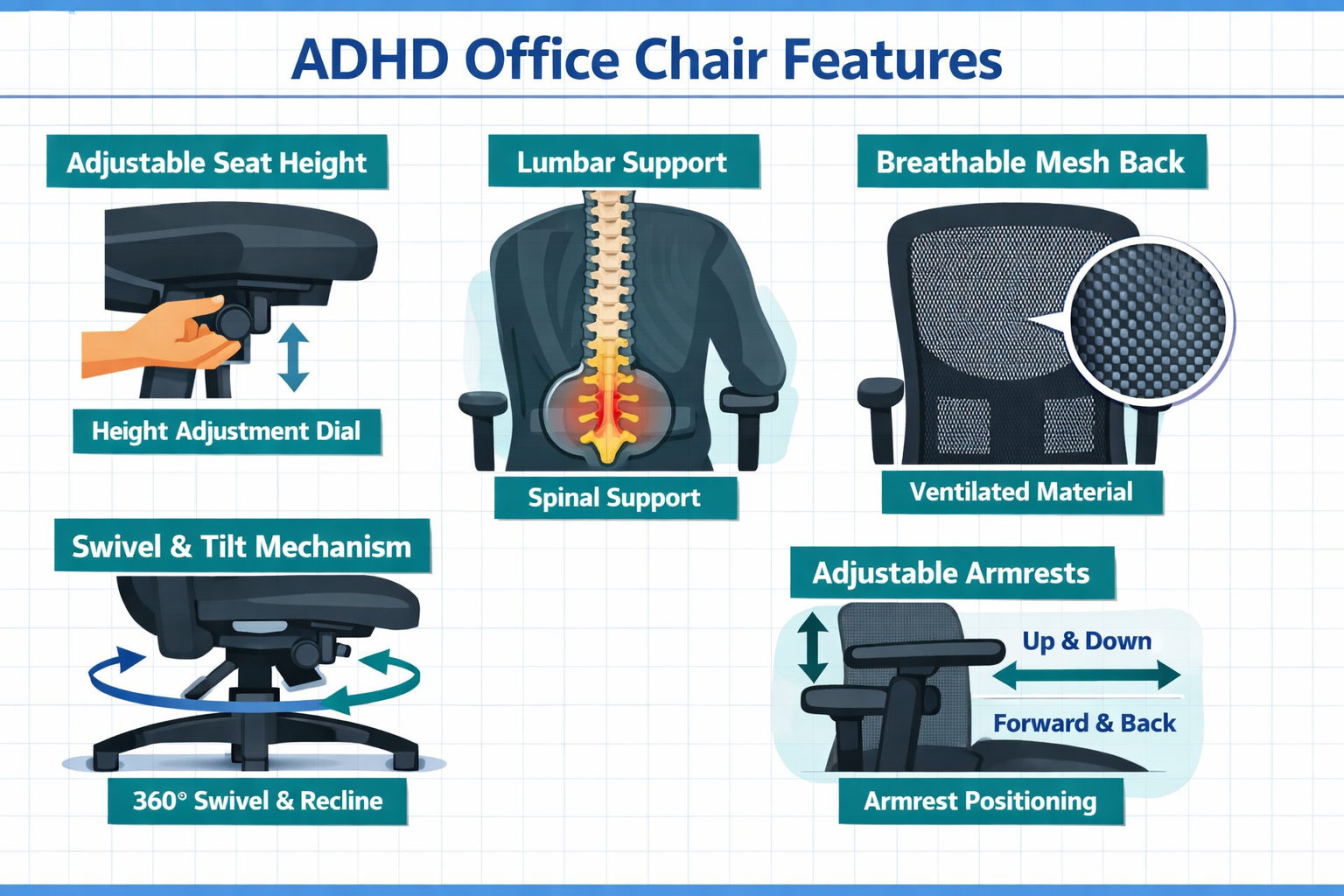
- 🪑 Core features matter most: look for adjustable height, lumbar support, swivel/tilt mechanics, and breathable upholstery.
- 💡 No single chair fits all ADHD presentations — sensory needs, hyperactivity levels, and body type all influence the right choice.
- 💰 Budget-friendly options exist — you don’t need to spend a fortune to get a concentration-enhancing chair.
- 🏠 Chair choice is just one piece of a holistic, ADHD-friendly workspace strategy.
Why ADHD Makes Sitting at a Desk So Hard
ADHD — Attention Deficit Hyperactivity Disorder, affects executive function, sensory regulation, and impulse control.
In a workplace setting, these challenges show up as:
- Constant fidgeting and leg bouncing
- Perching on the edge of a seat or sitting sideways
- Difficulty maintaining posture for long periods
- Sensory discomfort from heat, pressure, or fabric texture
- Restlessness that interrupts deep work
These aren’t bad habits. They’re neurological responses. The brain of someone with ADHD craves stimulation, and when it doesn’t get enough, the body compensates, often through movement.
“Movement isn’t the enemy of focus for people with ADHD — it’s often the gateway to it.”
Standard office chairs are designed for stillness. But stillness is the one thing many neurodivergent professionals struggle most to achieve.
That’s where ADHD-specific ergonomic design steps in.
What Is an ADHD Office Chair?
An ADHD office chair is a category of seating specifically designed, or well-suited, to support people with attention and hyperactivity challenges. The term “ADHD chairs” has grown in popularity as market awareness of neurodivergent workspace needs has increased.
These chairs share a common philosophy: controlled movement is better than forced stillness. Rather than locking you into one position, they provide outlets for physical restlessness while keeping you engaged and supported.
What Makes a Chair “ADHD-Friendly”?
| Feature | Why It Matters for ADHD |
|---|---|
| Adjustable seat height | Ensures proper posture, reducing physical discomfort |
| Lumbar support | Prevents slouching, which worsens fatigue and distraction |
| Tilt & swivel mechanics | Allows natural movement without leaving the chair |
| Breathable upholstery | Prevents overheating, a common sensory trigger |
| Contoured backrest | Follows the spine’s natural curve for lasting comfort |
| Cushioned seat | Reduces pressure point discomfort during long sessions |
| Armrest positioning | Supports upper body, reducing tension and restlessness |
Well-designed ADHD chairs offer tilt, swivel, recline, and bounce functions that allow users to shift positions without breaking focus.
Features like synchronized tilt create smoother, more natural movement that satisfies the body’s need for stimulation.
👉 Browse top-rated ADHD-friendly ergonomic chairs on Amazon – and find your perfect focus-enhancing seat today.
Top ADHD Office Chair Types: A Practical Comparison
Because every person with ADHD is different, no single chair design works for everyone [3]. Here’s a breakdown of the most effective seating options for neurodivergent professionals:
1. 🪑 Ergonomic Mesh Chairs
Best for: Sensory sensitivity, overheating, long work sessions
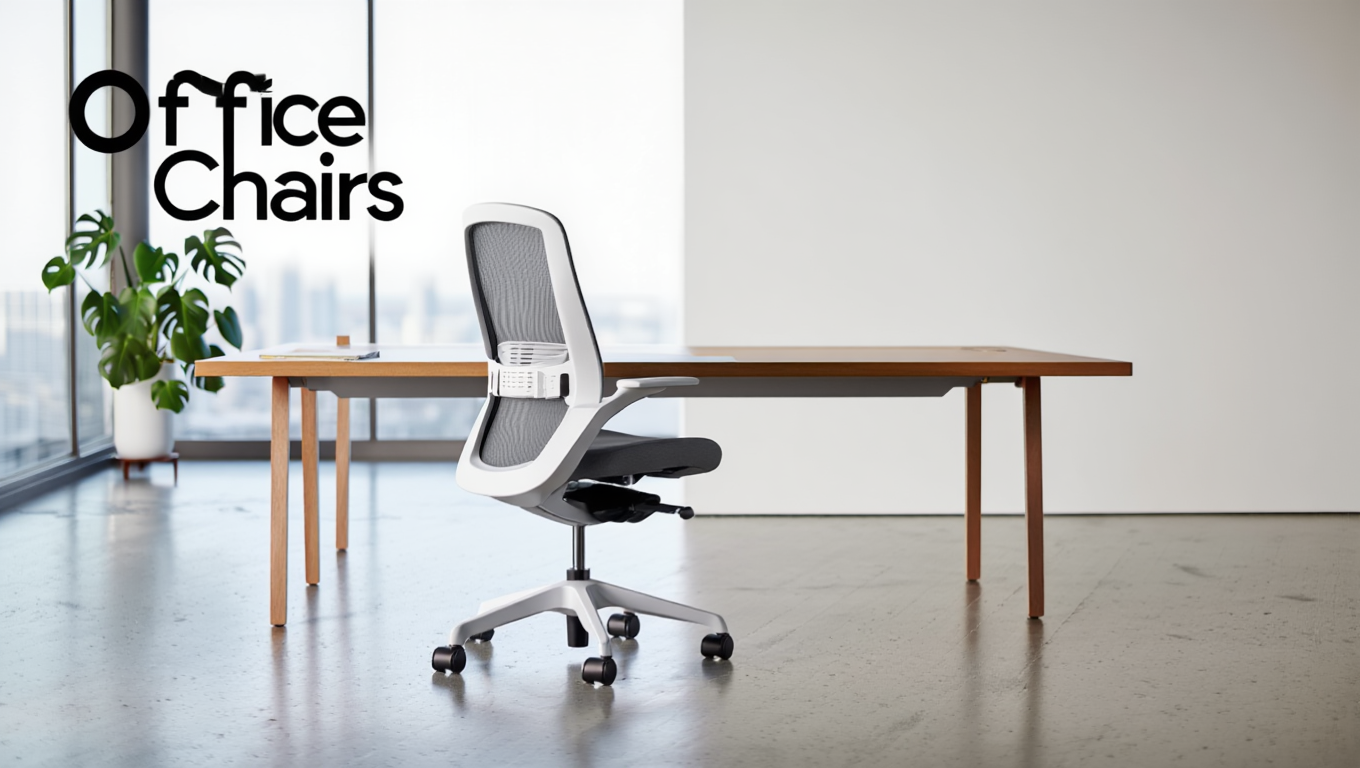
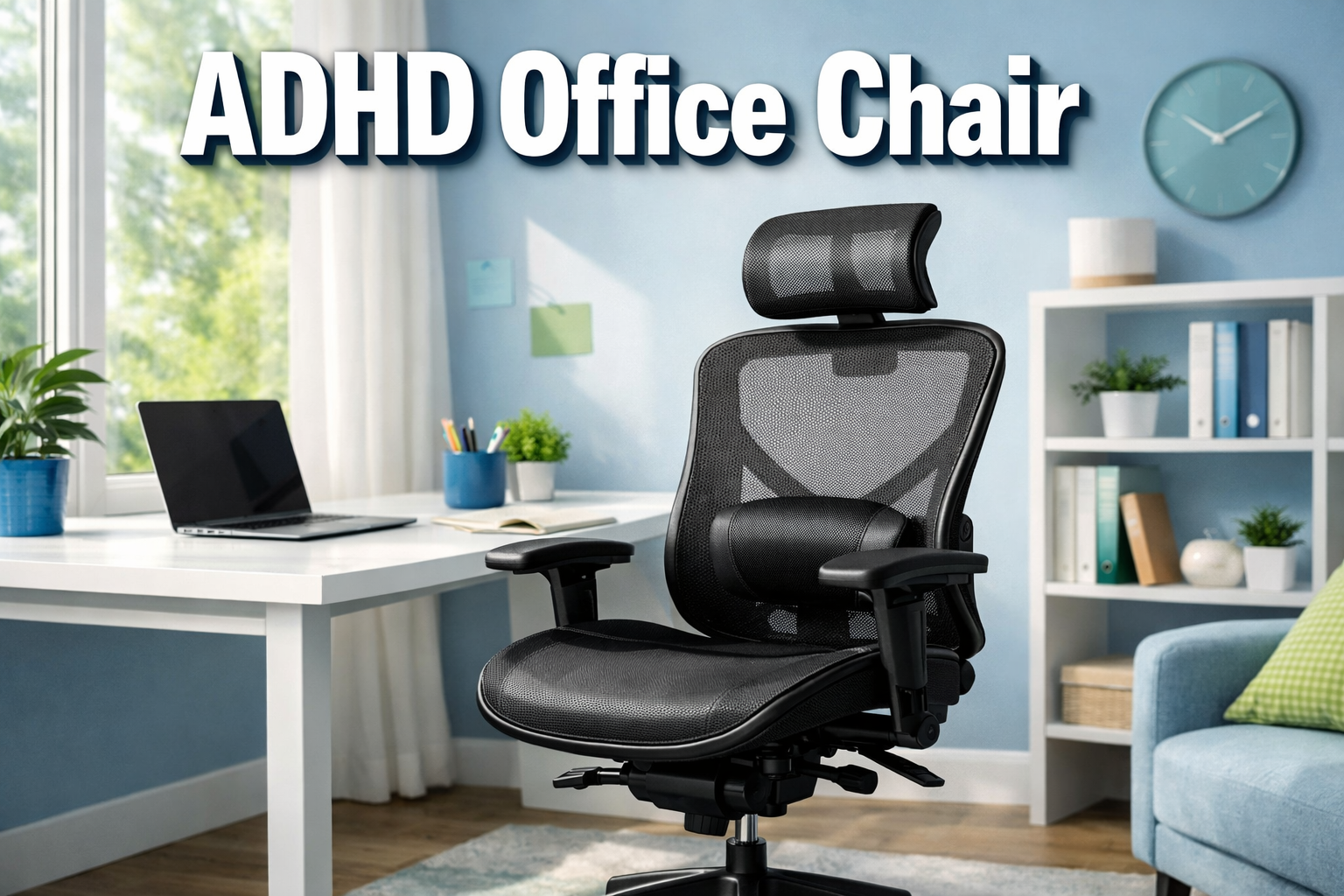
Mesh chairs offer breathability and structured support. They’re ideal for those who run hot or find fabric textures distracting. Look for models with adjustable lumbar support and multi-directional tilt. Our guide to breathable mesh chairs covers the top picks in detail.
2. ⚖️ Balance Ball Chairs
Best for: Hyperactivity, core engagement, active sitting
Sitting on an exercise ball (or a chair-mounted ball) engages core muscles and satisfies the need for movement. Research shows that children and adults with ADHD exhibited better in-seat behavior and improved cognitive task results when using dynamic seats like balance chairs.
3. 🔄 Kneeling Chairs
Best for: Posture improvement, reducing lumbar strain
Kneeling chairs tilt the pelvis forward, encouraging a natural spinal curve. They’re excellent for those who tend to slouch or perch on the edge of their seat.
4. 🧘 Saddle Chairs
Best for: Active sitting, hip flexibility, unconventional sitters
Saddle-style seating mimics a horseback riding position, promoting active engagement and reducing the urge to fidget destructively.
5. 🖥️ Active Sitting Stools
Best for: Standing desk pairing, movement-based focus
Wobble stools and leaning perches allow constant micro-movements. They pair well with a height-adjustable standing desk for a fully dynamic workspace.
The Neuroscience Behind Dynamic Sitting and ADHD
Here’s something competitors rarely explain: why movement helps ADHD brains focus.
The ADHD brain has lower baseline levels of dopamine and norepinephrine, the neurotransmitters responsible for motivation, attention, and reward.
Physical movement triggers the release of these chemicals. When someone with ADHD bounces their leg or shifts in their seat, their brain is essentially self-medicating.
Sensory regulation is a core design principle behind ADHD-friendly chairs, they help regulate sensory input, encourage movement, and create comfortable seating experiences that support focus and minimize distractions.
This is why dynamic sitting isn’t a distraction, it’s a cognitive support strategy.
Budget-Friendly ADHD Workspace Solutions
You don’t need to spend $1,000 on a chair to support your focus. Here are practical options at every price point:
Under $150:
- Add a balance cushion (wobble disc) to your existing chair
- Use a lumbar support pillow to improve posture
- Try a kneeling chair — many quality options fall in this range
$150–$400:
- Entry-level ergonomic mesh chairs with adjustable lumbar support
- Check our affordable ergonomic office chairs guide for reviewed options
- The TRALT Office Chair is a strong performer under $140
$400+:
- Premium ergonomic chairs with full customization
- Investment-grade options with long warranties and certified ergonomic design
For a curated list of current deals, explore top office chair deals to enhance your workspace comfort.
💡 Pro tip: Many employers are legally required to provide reasonable workplace accommodations for employees with ADHD under disability protection laws. An ergonomic chair may qualify, ask your HR department.
Building a Holistic ADHD-Friendly Home Office
An ADHD Office Chair is most effective as part of a broader neurodivergent workspace strategy. Consider these complementary approaches:
Movement breaks: Schedule micro-breaks every 25–30 minutes. Try simple office stretches to reset your focus.
Desk setup: Pair your chair with a clean, organized desk. Clutter increases cognitive load for ADHD brains. A modern home office desk with minimal visual noise helps.
Technology integration: Use focus timers, noise-canceling headphones, and distraction-blocking apps alongside your seating setup.
Posture awareness: Regularly check your posture. Our guide on improving posture with ergonomic chairs offers practical 2026 tips.
Exercise integration: Office workouts without equipment can help discharge excess energy during the workday.
Real Talk: What Users Say
“I switched to a balance ball chair six months ago and my afternoon productivity doubled. I didn’t realize how much energy I was wasting trying to sit still.” — Remote marketing manager, diagnosed with ADHD at 34
“The lumbar support on my new ergonomic chair stopped my back pain, which was a huge distraction I didn’t even know I had. Less pain = more focus.” — Software developer, ADHD + sensory processing differences
These experiences reflect what the research supports: addressing physical discomfort and providing movement outlets directly improves cognitive performance for neurodivergent individuals.
Ready to Find Your Perfect ADHD Office Chair?
The Best ADHD Office Chair for you depends on your unique sensory profile, work style, and budget.
Whether you’re drawn to a dynamic mesh ergonomic chair, a balance ball setup, or a kneeling chair, the key is choosing movement-friendly seating that works with your brain, not against it.
👉 Browse top-rated ADHD-friendly ergonomic chairs on Amazon – and find your perfect focus-enhancing seat today.
Conclusion
In 2026, we understand more than ever that neurodivergent professionals deserve workspaces designed for their brains. The right ADHD Office Chair isn’t about sitting still, it’s about sitting smart.
By choosing a chair that supports dynamic movement, provides sensory comfort, and adapts to your body, you’re investing in your focus, your health, and your long-term productivity.
Your next steps:
- Identify your primary ADHD sitting challenges (fidgeting, slouching, overheating, etc.)
- Match those challenges to the chair type that addresses them
- Set a realistic budget and explore options at that level
- Pair your new chair with movement breaks and a clean desk setup
- Give yourself 2–3 weeks to adjust before evaluating results
The right chair won’t cure ADHD, but it can make working with it significantly easier.
Your brain works differently, and your workspace should too. 🧠✨
👉 Browse top-rated ADHD-friendly ergonomic chairs on Amazon – and find your perfect focus-enhancing seat today.