Haworth Zody vs Steelcase Leap V2
Last updated: March 4, 2026
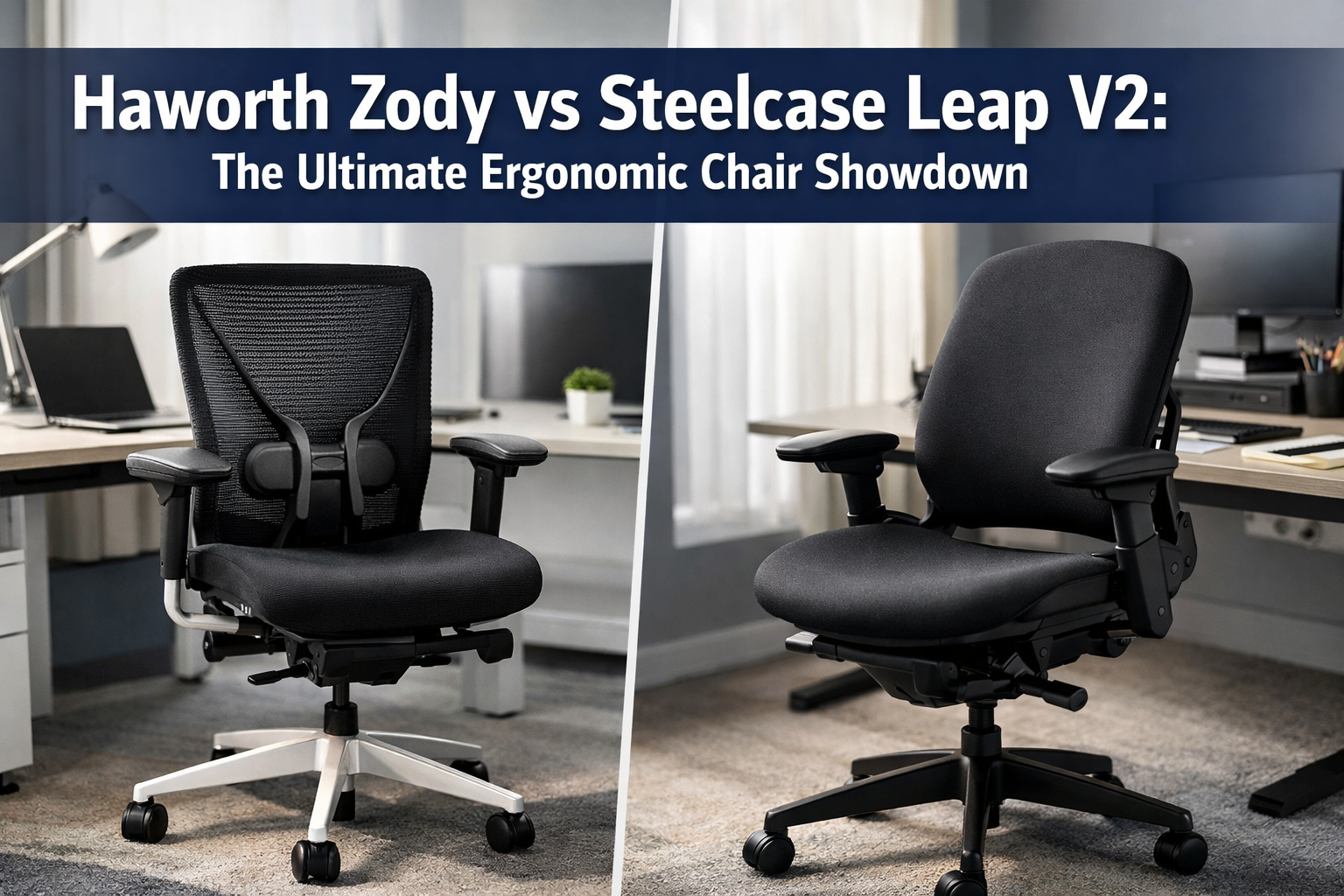
When choosing between the Haworth Zody vs Steelcase Leap V2, you’re comparing two of the most respected ergonomic office chairs on the market.
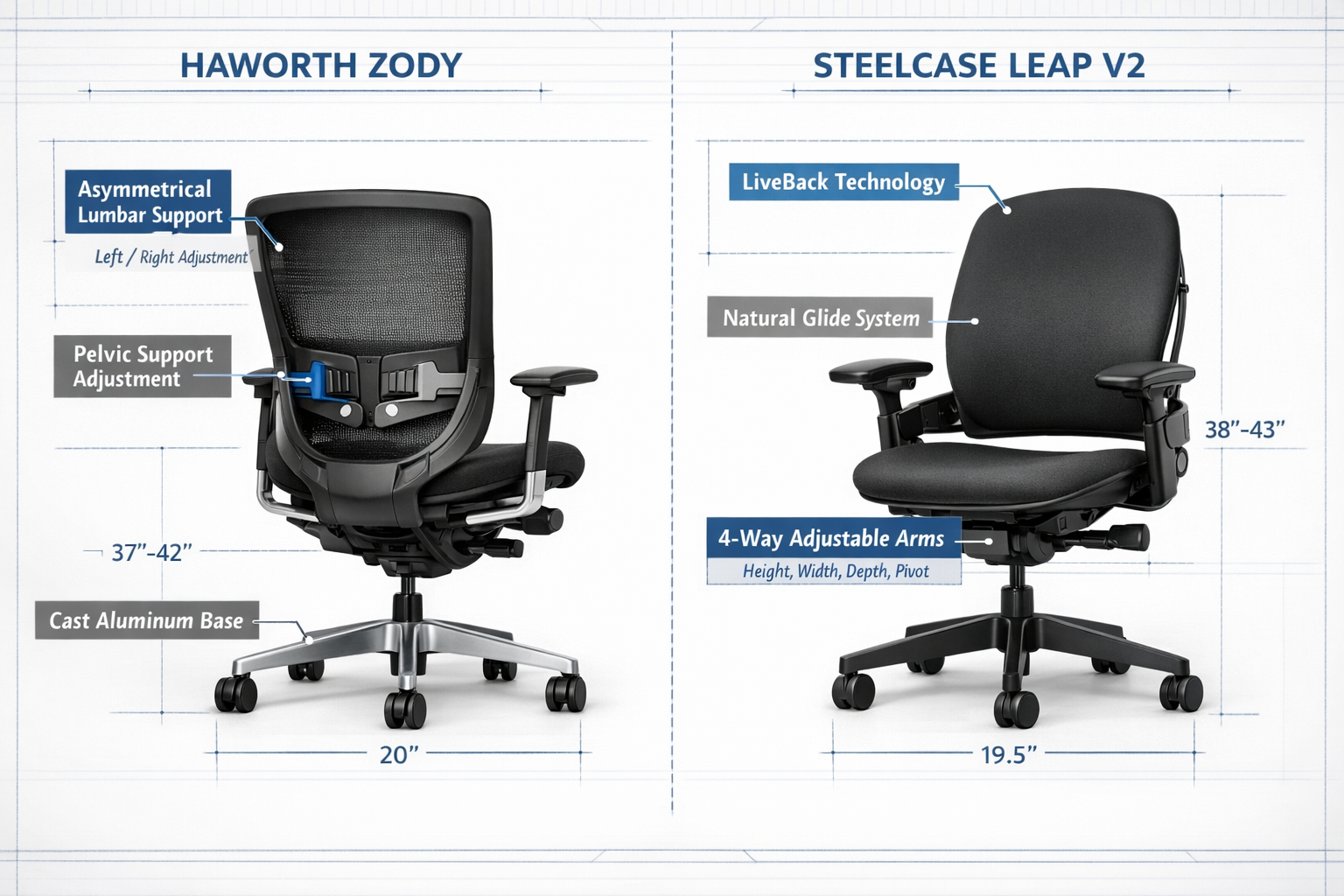
The Steelcase Leap V2 offers dynamic LiveBack technology that adapts to your spine’s natural movements, while the Haworth Zody features asymmetrical lumbar support designed to target specific pressure points.
Both chairs deliver professional-grade ergonomics, but they take different approaches to comfort and back support.
Key Takeaways
- The Steelcase Leap V2 excels in dynamic back support with LiveBack technology that adjusts to your spine’s changing positions throughout the day
- The Haworth Zody offers targeted lumbar relief through asymmetrical adjustment that addresses individual pressure points more precisely
- Reddit user data shows both chairs achieve 81% approval ratings, though the Leap V2 has greater market visibility with 436 mentions versus Zody’s 201
- Refurbished Leap V2 chairs from 2006 still function properly, demonstrating exceptional long-term durability and value retention
- The Zody uses premium materials including cast aluminum bases and glass-reinforced nylon, with over 3 million units in use globally
- Price positioning differs significantly, with the Leap V2 typically commanding $100-200 more than the Zody in new condition
- Both chairs qualify as health investments that can reduce workplace injury costs and improve productivity for remote and office workers
- Adjustment complexity varies: the Leap V2 offers more intuitive controls while the Zody requires more initial setup time
Quick Answer
The Haworth Zody vs Steelcase Leap V2 comparison comes down to your specific back support needs and budget.
Choose the Steelcase Leap V2 if you want dynamic spine support that automatically adjusts as you move, prefer a chair with proven 20-year durability, and don’t mind paying premium prices.
Select the Haworth Zody if you need precise asymmetrical lumbar targeting for specific pain points, want premium materials at a slightly lower cost, or prefer a chair designed specifically around pelvic support principles.
What Are the Core Differences Between Haworth Zody vs Steelcase Leap V2?
The fundamental difference between these premium ergonomic office chairs lies in their back support philosophy.
The Steelcase Leap V2 uses LiveBack technology that flexes and changes shape as your spine moves, providing continuous dynamic support.
The Haworth Zody employs asymmetrical lumbar support that lets you adjust left and right sides independently to address individual pressure points.
Key Structural Differences:
- Back Support System: Leap V2 features a flexible spine that mimics natural vertebrae movement; Zody uses a fixed frame with independently adjustable lumbar pads
- Seat Design: Leap V2 includes a Natural Glide System where the seat moves forward as you recline; Zody maintains a more traditional pivot point
- Adjustment Approach: Leap V2 prioritizes intuitive, minimal-control adjustments; Zody offers more granular customization options
- Material Construction: Leap V2 uses steel frame construction; Zody incorporates cast aluminum and glass-reinforced nylon
According to professional assessments, the Leap V2’s backrest is “one of the best seat backs for support, especially in the lumbar region,” with adjustable tension that users can fine-tune or completely remove. The Zody’s asymmetrical design addresses a common issue where one side of your lower back experiences more pressure than the other.
Choose the Leap V2 if: You change positions frequently throughout the day, prefer chairs that adapt automatically to your movements, or prioritize proven long-term durability (refurbished units from 2006 still function properly).
Choose the Zody if: You have specific, localized back pain that requires targeted adjustment, prefer more control over individual ergonomic settings, or want premium materials at a slightly lower price point.
Both chairs represent significant investments in workplace wellness and productivity, but they achieve ergonomic excellence through different engineering approaches.
How Do the Ergonomic Features Compare in the Haworth Zody vs Steelcase Leap V2?
Both chairs deliver professional-grade ergonomics, but their feature sets address different user priorities. The Leap V2 received a 4.5/5 rating from professional reviewers who noted its “dynamic support” that adapts to spine movements throughout the day [3].
Lumbar Support Systems
Steelcase Leap V2:
- LiveBack technology flexes with your spine’s natural curve
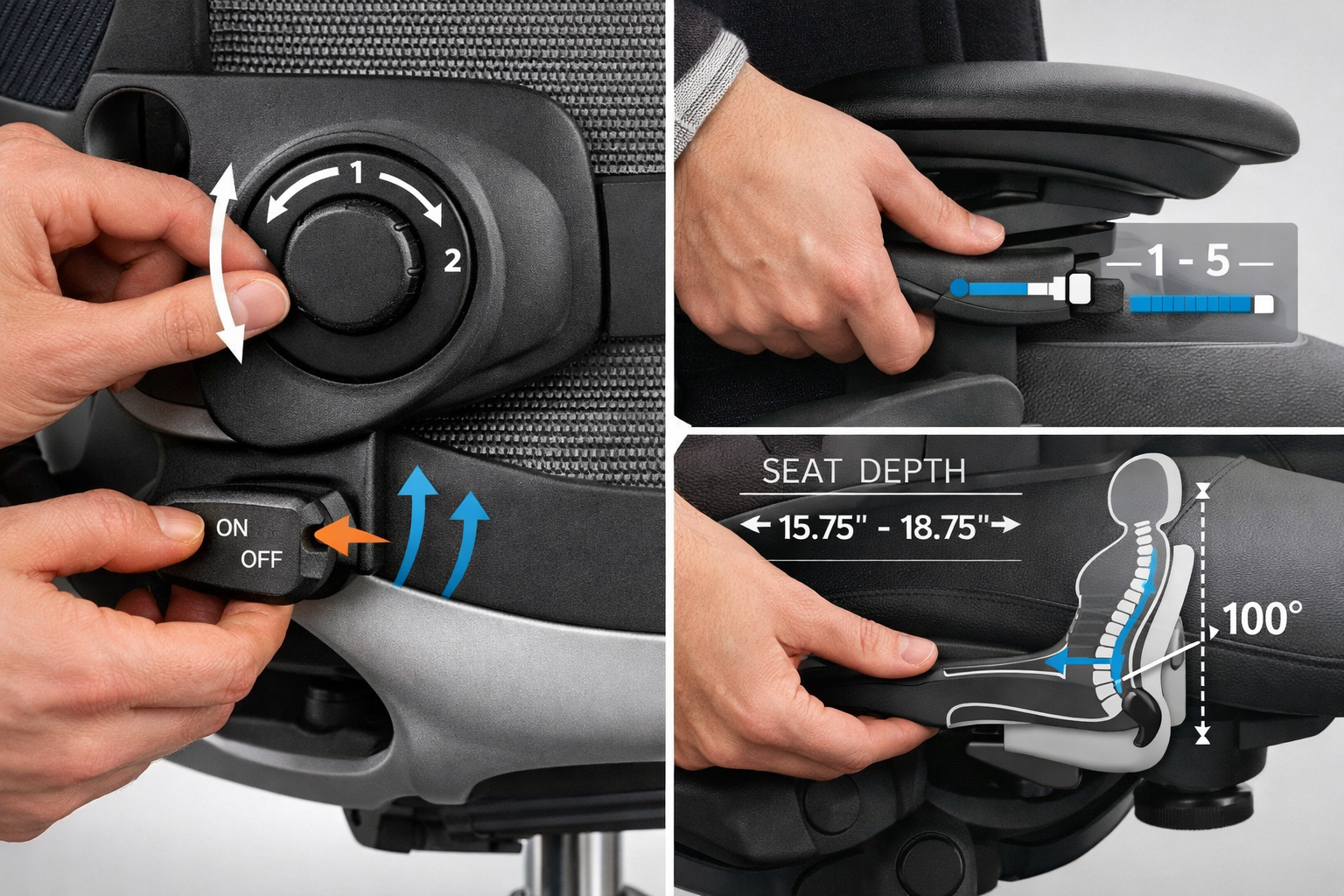
- Single lumbar depth adjustment controls firmness
- Backrest tension can be completely removed for maximum flexibility
- Supports recline angles up to 130 degrees with continuous support
Haworth Zody:
- Asymmetrical lumbar adjustment (left and right sides independent)
- Pelvic support system targets lower spine specifically
- Four-position lumbar depth settings
- Designed in collaboration with ergonomic experts to address pressure point imbalances [5]
Seat Adjustments
The Leap V2’s Natural Glide System moves the seat forward as you recline, maintaining proper eye-to-screen distance and reducing pressure on the back of your thighs. This creates a more natural reclining motion compared to traditional pivot points.
The Zody features a flatter seat shape that distributes weight more evenly, similar to Steelcase’s Amia model. This design generates fewer tailbone pressure complaints but may feel less plush initially.
Armrest Capabilities
- Leap V2: 4-way adjustable arms (height, width, depth, pivot) with smooth, tool-free adjustments
- Zody: 4-way adjustable arms with similar range but slightly stiffer adjustment mechanisms
Recline and Tilt Features
Both chairs offer synchronized tilt mechanisms where the seat and back move together proportionally. The Leap V2’s tension adjustment is more accessible (front-mounted lever) while the Zody’s control sits under the seat.
A common mistake buyers make is assuming more adjustments equal better ergonomics. In practice, the Leap V2’s simpler control layout often leads to better daily use because users actually adjust it, while the Zody’s more complex system may go unused after initial setup.
For users dealing with lower back pain relief, both chairs provide medical-grade support, but the asymmetrical option in the Zody addresses cases where pain concentrates on one side.
What Do Real Users Say About Haworth Zody vs Steelcase Leap V2 Performance?
Based on analysis of 637 Reddit mentions, both chairs achieved identical 81% approval ratings, indicating strong user satisfaction across both models [1]. However, the Leap V2 received 436 mentions compared to the Zody’s 201, suggesting greater market awareness and adoption.
Long-Term Durability Feedback
Professional reviewers who tested the Leap V2 over three years confirmed that refurbished units dating back to 2006 still function properly, demonstrating exceptional build longevity. This durability makes the higher initial investment more justifiable when calculated over 15-20 year lifespans.
The Zody’s 3 million units in global use [8] provide substantial real-world validation, though fewer long-term durability studies exist compared to the extensively documented Leap V2.
Common User Praise
Steelcase Leap V2 users highlight:
- Intuitive adjustments that don’t require reading manuals
- Consistent comfort during 8-12 hour workdays
- Back support that “disappears” because it feels natural
- Minimal break-in period (comfortable from day one)
Haworth Zody users emphasize:
- Precise lumbar targeting that addresses specific pain points
- Premium feel of materials and construction
- Effective pelvic support for users with lower spine issues
- Better value proposition when purchasing refurbished
Frequent Complaints
Leap V2 criticisms:
- Premium pricing ($1,000+ new) creates affordability barriers
- Seat cushion may feel firm for users preferring plush seating
- Limited color and fabric options compared to competitors
- Recent return policy reduction from 30 to 14 days
Zody criticisms:
- Adjustment complexity requires more initial setup time
- Less market availability makes testing before purchase difficult
- Armrest adjustments feel stiffer than Leap V2
- Fewer online reviews make research more challenging
One Reddit user noted they would “personally be sitting in the Zody if it weren’t for the Steelcase Leap chair,” indicating the chairs occupy nearly identical quality tiers in professional assessment.
For users considering budget-friendly ergonomic options, both chairs offer significant value in the refurbished market, where prices drop 50-70% while maintaining full functionality.
How Do Pricing and Value Compare for Haworth Zody vs Steelcase Leap V2?
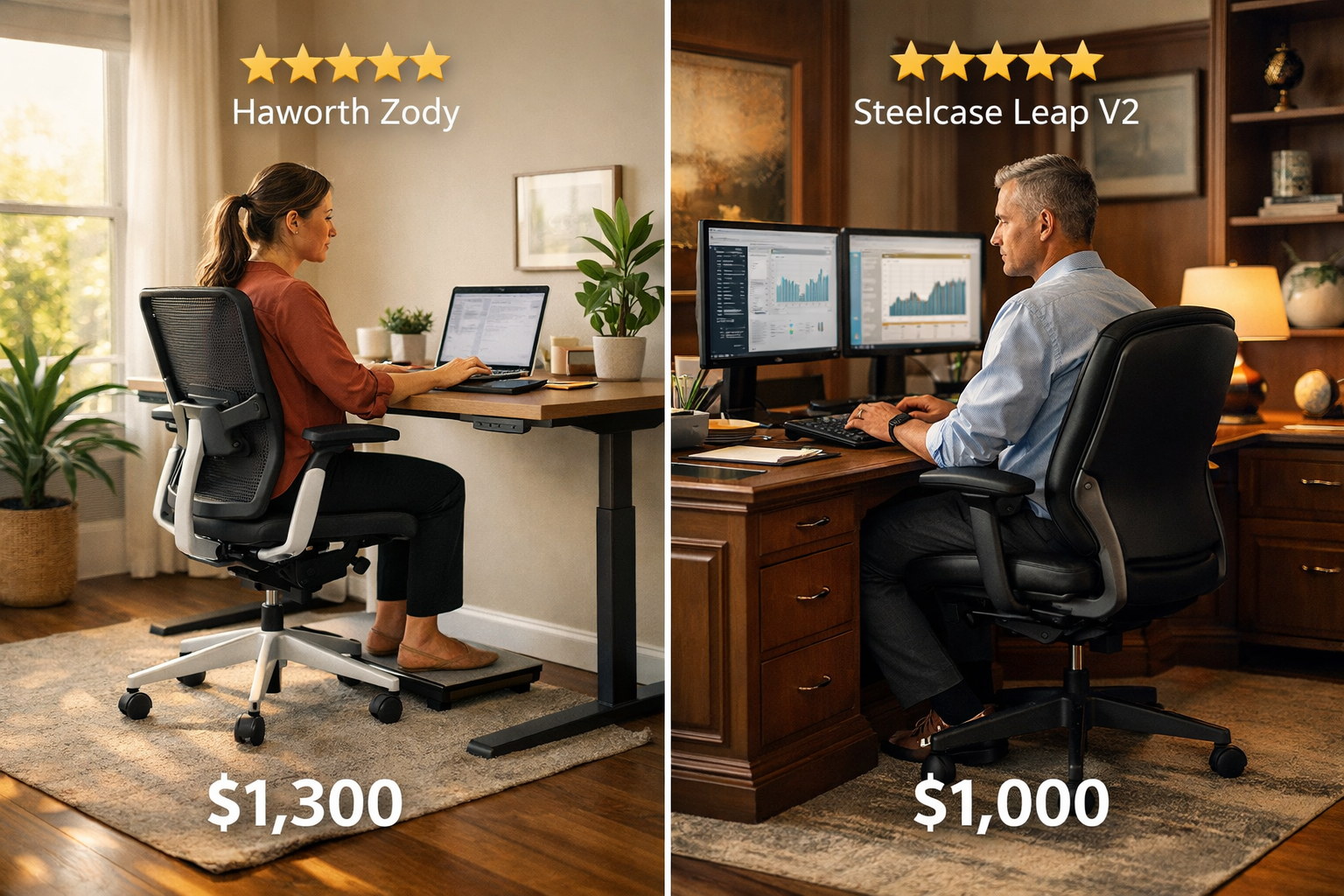
The Steelcase Leap V2 typically costs $1,000-1,200 new with standard configurations, while the Haworth Zody ranges from $800-1,000 new, creating a $100-200 price difference that narrows significantly in the refurbished market.
New Purchase Pricing
Steelcase Leap V2 (2026 pricing):
- Base model with standard fabric: $1,029
- Fully loaded with leather and headrest: $1,400+
- Premium fabric upgrades: +$150-300
- Extended warranty options available
Haworth Zody (2026 pricing):
- Base model with standard features: $849
- Fully configured with all adjustments: $1,100
- Premium materials and finishes: +$100-250
- Standard 12-year warranty included
Refurbished and Remanufactured Options
The refurbished market dramatically changes the value equation. Both chairs maintain structural integrity for 15-20 years, making remanufactured office chairs excellent investments.
Typical refurbished pricing:
- Leap V2: $350-550 depending on condition and age
- Zody: $300-450 for professionally remanufactured units
- Both options include new upholstery, cleaned mechanisms, and 1-3 year warranties
A common buyer mistake is comparing only new prices. When you factor in 15-year lifespan, a $500 refurbished Leap V2 costs $33 per year, while a $1,200 new model costs $80 per year. The refurbished option delivers 95% of the performance at 42% of the annual cost.
Total Cost of Ownership
Leap V2 advantages:
- Proven 20+ year durability reduces replacement frequency
- Higher resale value maintains investment
- Wider parts availability for repairs
- More refurbished inventory creates buyer options
Zody advantages:
- Lower initial purchase price
- Comparable warranty coverage (12 years standard)
- Premium materials reduce maintenance needs
- Cast aluminum base resists wear better than steel
Return on Investment Calculation
For remote workers spending 40+ hours weekly in their chair, both models qualify as health investments. Poor seating contributes to workplace injuries costing employers $15-20 billion annually. A $1,000 chair that prevents one medical visit ($150-500) pays for itself within 2-3 years.
Choose refurbished if you want 80-90% of new-chair performance at 40-50% of the cost. Select new if you need specific fabric choices, want full manufacturer warranty, or prefer customized configurations.
Understanding why office chairs cost what they do helps contextualize these premium prices within the broader ergonomic seating market.
Which Body Types and Use Cases Favor Haworth Zody vs Steelcase Leap V2?
The Leap V2 accommodates users 5’0″ to 6’4″ and up to 300 pounds, while the Zody fits 5’2″ to 6’6″ and supports up to 350 pounds, making the Zody slightly better for taller and heavier users.
Height Considerations
For shorter users (under 5’4″):
The Leap V2’s seat depth adjustment and lower seat height range make it more suitable. The Natural Glide System prevents the common issue where shorter users’ feet dangle when reclining. For specific recommendations, see our guide on office chairs for short people.
For taller users (over 6’2″):
The Zody’s extended backrest height and deeper seat pan provide better thigh support and upper back coverage. The higher weight capacity (350 lbs vs 300 lbs) also indicates more robust construction for larger frames. Taller professionals should review our chairs for tall people guide.
Weight Distribution Needs
For users over 250 pounds:
The Zody’s cast aluminum base and 350-pound capacity make it the safer choice. The flatter seat design distributes weight more evenly, reducing pressure concentration. Users in this category should also consider our recommendations for big and tall office chairs.
For average-weight users (150-200 pounds):
Both chairs perform equally well. Choose based on back support preference rather than weight capacity.
Work Style Matching
Choose the Leap V2 if you:
- Shift positions frequently throughout the day
- Spend 6+ hours in video calls requiring upright posture
- Need a chair that adapts automatically without constant adjustment
- Work in fast-paced environments where simplicity matters
- Prefer task-oriented seating that encourages active sitting
Choose the Zody if you:
- Experience specific, localized back pain requiring targeted support
- Spend extended periods in deep focus work (coding, writing, design)
- Have asymmetrical posture issues or spinal conditions
- Prefer granular control over every ergonomic parameter
- Need pelvic support due to lower spine conditions
Specific Health Conditions
For sciatica sufferers:
The Zody’s pelvic support system and flatter seat design reduce nerve compression better than the Leap V2’s more contoured seat. See our chairs for sciatica relief for additional options.
For general lower back pain:
Both chairs excel, but the Leap V2’s dynamic support prevents the static loading that causes stiffness during long sitting periods. Complement your chair with office yoga poses for comprehensive back health.
For posture correction:
The Leap V2’s LiveBack technology encourages natural spine alignment without forcing rigid positioning. Pair with office exercises for better posture for optimal results.
A critical mistake is choosing a chair based solely on brand reputation. A 5’2″ user will experience better ergonomics in a properly sized Zody than an oversized Leap V2, regardless of the Leap’s superior reputation.
What Alternatives Should You Consider Alongside Haworth Zody vs Steelcase Leap V2?
While the Haworth Zody vs Steelcase Leap V2 comparison represents the premium tier, several alternatives offer different trade-offs worth considering.
Direct Premium Competitors
Herman Miller Aeron Classic:
The Aeron features full mesh construction (more breathable than padded options) and a more structured, fixed feel that encourages upright task posture. It costs $1,200-1,600 new but maintains exceptional resale value. Choose the Aeron if you run hot, prefer mesh over padding, or want the most recognizable ergonomic chair brand.
Haworth Fern:
The Fern offers a softer, more dynamic backrest with a “frond” design that encourages micro-movements. It appeals to users who prefer flexibility over aggressive lumbar support. At $800-1,000 new, it sits between the Zody and Leap V2 in pricing.
Budget-Friendly Alternatives
Steelcase Amia:
The Amia shares many Leap V2 qualities at $600-800 new. It features a flatter seat shape that distributes weight more evenly and generates fewer tailbone pressure complaints. Choose the Amia if you want Steelcase quality with 70% of Leap V2 features at 60% of the cost.
Refurbished Premium Chairs:
Professional remanufacturing programs offer Leap V2s and Zodys at $300-550, delivering 90% of new-chair performance at 40% of the cost. These represent the best value proposition for budget-conscious buyers seeking premium ergonomics.
Comparison Decision Matrix
| Feature | Leap V2 | Zody | Aeron | Fern | Amia |
|---|---|---|---|---|---|
| Dynamic Back Support | Excellent | Good | Moderate | Excellent | Good |
| Targeted Lumbar | Good | Excellent | Moderate | Good | Good |
| Breathability | Moderate | Moderate | Excellent | Good | Moderate |
| Adjustment Simplicity | Excellent | Moderate | Good | Good | Excellent |
| Price (New) | $1,000-1,200 | $800-1,000 | $1,200-1,600 | $800-1,000 | $600-800 |
| Weight Capacity | 300 lbs | 350 lbs | 350 lbs | 300 lbs | 300 lbs |
When to Choose Alternatives
Pick the Herman Miller Aeron if:
- You prioritize breathability over cushioned comfort
- You want maximum brand recognition and resale value
- You prefer structured support over dynamic flexibility
- You’re willing to pay premium prices for iconic design
Pick the Haworth Fern if:
- You want softer, more forgiving back support
- You prefer chairs that encourage natural movement
- You like modern aesthetic design
- You want Haworth quality at a lower price than the Zody
Pick the Steelcase Amia if:
- You need Steelcase reliability on a tighter budget
- You prefer flatter seats over contoured designs
- You want simpler adjustments than the Leap V2
- You’re buying multiple chairs for a home office or small business
For comprehensive comparisons of quality office chairs for comfort, explore our detailed buyer’s guides that break down specific use cases and body type matching.
How Do Warranty, Support, and Longevity Compare?
Both manufacturers back their chairs with industry-leading warranties, but coverage details and customer support experiences differ in important ways.
Warranty Coverage Details
Steelcase Leap V2:
-
-
- 12-year comprehensive warranty (standard)
- Covers all mechanisms, adjustments, and structural components
- Fabric and foam covered for 3 years
- Recent policy change: warranty coverage for sales outside North America has been reduced
- Return window decreased from 30 to 14 days in 2026
-
Haworth Zody:
-
-
- 12-year comprehensive warranty (standard)
- Covers frame, mechanisms, and all moving parts
- Upholstery covered for 3 years
- 30-day return policy maintained (more generous than Steelcase)
- International warranty terms remain consistent
-
Real-World Longevity Data
Professional testing confirms that Leap V2 units from 2006 still function properly after 20 years, demonstrating exceptional durability. The chair has maintained consistent top rankings in professional reviews, with reviewers noting minimal performance degradation over time.
The Zody’s 3 million units in global use provide substantial validation, though fewer published long-term studies exist. The cast aluminum base and glass-reinforced nylon components suggest comparable longevity to the Leap V2’s steel construction.
Parts Availability and Repair
Steelcase advantages:
-
-
- Wider dealer network provides easier access to replacement parts
- More third-party repair services familiar with Leap V2 mechanisms
- Larger refurbished market creates parts availability from cannibalized chairs
- Online communities provide extensive DIY repair guidance
-
Haworth advantages:
-
-
- Premium materials reduce frequency of needed repairs
- Direct manufacturer support often more responsive
- Fewer model variations simplify parts identification
- Cast aluminum components resist wear better than steel equivalents
-
Customer Support Experiences
User feedback indicates Steelcase’s larger market presence translates to faster response times and more local service options. Haworth’s smaller but dedicated dealer network provides more personalized service but may require longer wait times in some regions.
A common issue with both manufacturers: warranty claims require proof of purchase from authorized dealers. Buying from unauthorized resellers or private parties voids warranty coverage, making the initial savings potentially costly.
Maintenance Requirements
Both chairs require minimal maintenance:
-
-
- Quarterly: Check and tighten adjustment knobs
- Annually: Vacuum fabric and clean mechanism pivot points
- As needed: Lubricate squeaky joints with silicone spray
-
The Leap V2’s more complex LiveBack mechanism has more potential failure points, while the Zody’s simpler fixed-frame design reduces long-term maintenance needs.
For users committed to workplace wellness, investing in a chair with strong warranty backing protects your ergonomic investment over decades of daily use.
What Should You Know Before Buying Haworth Zody vs Steelcase Leap V2 in 2026?
The office chair market is evolving rapidly in 2026, with new technologies and changing policies affecting purchase decisions for both the Haworth Zody and Steelcase Leap V2.
Recent Policy Changes
Steelcase’s tightened return policy (reduced from 30 to 14 days) means you have less time to test the Leap V2 in your actual work environment. This makes trying before buying more critical. Request demo units from local dealers or purchase from retailers with more generous return windows.
Warranty coverage changes for international buyers affect the Leap V2’s value proposition outside North America. Verify specific warranty terms for your region before purchasing.
Emerging Market Trends
The global ergonomic office chair market reached $14.49 billion in 2025 and projects growth to $17.84 billion by 2029 at a 5.3% CAGR, driven by remote and hybrid work adoption. This growth increases both new and refurbished chair availability.
Smart technology integration is emerging in 2026, with office chairs incorporating AI-driven personalized adjustments and active posture correction. Neither the Zody nor Leap V2 currently offers these features, but both manufacturers are developing next-generation models. If you want cutting-edge technology, waiting 6-12 months may provide smart-enabled versions.
Testing Before Purchase
Critical steps for in-person testing:
-
-
- Sit for minimum 30 minutes – Initial comfort differs from sustained comfort
- Perform your actual work tasks – Typing, mousing, video calls reveal real-world fit
- Test all adjustments – Ensure you understand and can operate every control
- Wear typical work clothing – Fabric interaction affects comfort
- Simulate your longest work sessions – If you work 10-hour days, test accordingly
-
Questions to ask dealers:
-
-
- What’s the exact return policy and restocking fee?
- Are floor models available at discount?
- What’s the lead time for custom configurations?
- Do you offer trade-in programs for existing chairs?
- What’s included in warranty service (labor, parts, shipping)?
-
New vs. Refurbished Decision Framework
Buy new if:
-
-
- You need specific fabric or color options
- You want full manufacturer warranty
- You’re purchasing through corporate procurement requiring new equipment
- You prefer knowing the complete ownership history
-
Buy refurbished if:
-
-
- You prioritize value over customization
- You’re comfortable with 1-3 year warranties instead of 12 years
- You want to reduce environmental impact
- You can inspect the chair before purchase
-
Professional remanufacturing programs replace all wear components (fabric, foam, gas cylinders) while maintaining structural integrity, delivering 90-95% of new-chair performance at 40-50% of the cost.
Common Buying Mistakes to Avoid
❌ Choosing based on brand alone – Both chairs excel, but individual fit matters more than reputation
Ignoring your actual work patterns – A chair for 4-hour sessions differs from one for 12-hour days
❌ Skipping the test sit – Online reviews can’t predict your specific body’s response
Overlooking refurbished options – Professionally remanufactured chairs offer exceptional value
❌ Forgetting about complementary ergonomics – Even the best chair needs proper desk height, monitor position, and regular movement breaks
Where to Buy
Authorized dealers provide full warranty coverage and return privileges. Office furniture liquidators offer steep discounts on refurbished units. Direct from manufacturer ensures authenticity but typically costs more than dealer pricing.
For budget-conscious buyers, explore office chair clearance deals and wholesale office chair options for additional savings opportunities.
Frequently Asked Questions
Which chair is better for all-day sitting, Haworth Zody or Steelcase Leap V2?
Both chairs support all-day sitting, but the Steelcase Leap V2’s dynamic LiveBack technology adapts better to position changes throughout long workdays. The Haworth Zody excels if you maintain relatively consistent posture but need targeted lumbar support. For 10+ hour sessions, the Leap V2’s automatic adjustment reduces fatigue from manual repositioning.
Can I use either chair if I have chronic lower back pain?
Yes, both chairs address lower back pain effectively but through different mechanisms. The Leap V2 provides continuous dynamic support that prevents static loading, while the Zody’s asymmetrical lumbar adjustment targets specific pain points. Consult with a healthcare provider to determine whether dynamic or targeted support better addresses your specific condition.
How long do Haworth Zody and Steelcase Leap V2 chairs typically last?
The Steelcase Leap V2 demonstrates proven 20+ year longevity, with refurbished units from 2006 still functioning properly. The Haworth Zody’s premium materials (cast aluminum, glass-reinforced nylon) suggest comparable lifespan, though fewer long-term studies exist. Both chairs should provide 15-20 years of daily use with minimal maintenance.
Are refurbished versions of these chairs worth buying?
Refurbished Leap V2 and Zody chairs from professional remanufacturers deliver 90-95% of new-chair performance at 40-50% of the cost. They include new upholstery, cleaned mechanisms, and 1-3 year warranties. This represents exceptional value if you don’t need specific customization options and can accept shorter warranty coverage.
Which chair is better for shorter people under 5’4″?
The Steelcase Leap V2 accommodates shorter users better with its lower seat height range and Natural Glide System that prevents feet from dangling during recline. The seat depth adjustment also helps shorter users achieve proper thigh support. The Zody works for users down to 5’2″ but requires more careful adjustment to fit properly.
Do these chairs work well for heavy users over 250 pounds?
The Haworth Zody’s 350-pound weight capacity and cast aluminum base make it the better choice for heavier users. Its flatter seat design distributes weight more evenly, reducing pressure concentration. The Leap V2’s 300-pound limit works for most users but provides less safety margin for individuals near that threshold.
Haworth Zody vs Steelcase Leap V2: Ultimate Guide 2026
How difficult is assembly for these chairs?
Both chairs arrive mostly assembled, requiring only base attachment and armrest installation. The Steelcase Leap V2 typically takes 10-15 minutes with included tools. The Haworth Zody requires similar time but has slightly more complex adjustment setup. Neither requires professional assembly, though dealer delivery often includes setup service.
Can I add a headrest to either chair?
The Steelcase Leap V2 offers an optional headrest attachment ($150-200) that integrates with the existing back structure. The Haworth Zody does not have a factory headrest option, though third-party universal headrests can be adapted with varying success. If headrest support is essential, the Leap V2 provides the better solution.
Which chair holds its resale value better?
The Steelcase Leap V2 maintains stronger resale value due to higher brand recognition and larger market demand. Well-maintained used Leap V2s sell for 40-50% of original price after 5 years, while Zodys typically fetch 30-40%. Both chairs’ exceptional durability makes them worthwhile long-term investments regardless of resale considerations.
How do these chairs compare for home office vs. corporate office use?
Both chairs excel in either environment. The Leap V2’s cleaner aesthetic and wider color options suit corporate environments better, while the Zody’s premium materials and targeted support appeal to home office users who prioritize personal comfort over uniformity. For home office ergonomics, either chair provides professional-grade support.
What’s the best way to adjust these chairs for optimal ergonomics?
Start with seat height so feet rest flat on the floor with thighs parallel to the ground. Adjust seat depth to leave 2-3 inches between seat edge and back of knees. Set lumbar support to match your spine’s natural curve. Adjust armrests so shoulders relax with elbows at 90 degrees. Fine-tune recline tension to your weight and movement preference.
Do these chairs require special maintenance or cleaning?
Both chairs need minimal maintenance: quarterly tightening of adjustment knobs, annual vacuuming of fabric, and occasional lubrication of squeaky joints with silicone spray. Avoid harsh chemicals on upholstery. The Leap V2’s more complex mechanism benefits from annual professional inspection if used in demanding environments, while the Zody’s simpler design requires less frequent service.
Conclusion
The Haworth Zody vs Steelcase Leap V2 comparison reveals two exceptional ergonomic chairs that achieve professional-grade comfort through different engineering philosophies.
Steelcase Leap V2 excels with dynamic LiveBack technology that adapts automatically to your movements, making it ideal for users who shift positions frequently and prefer intuitive adjustments.
Haworth Zody delivers targeted relief through asymmetrical lumbar support, serving users with specific pain points and those who value granular control over their ergonomic settings.
Both chairs demonstrate exceptional build quality and longevity, with the Leap V2 offering proven 20+ year durability and the Zody featuring premium materials including cast aluminum and glass-reinforced nylon.
Reddit user data showing identical 81% approval ratings confirms that both chairs satisfy the vast majority of users.
Your next steps:
-
-
- Identify your primary need – Dynamic adaptation (Leap V2) or targeted support (Zody)
- Test before buying – Spend 30+ minutes in each chair performing actual work tasks
- Consider refurbished options – Professional remanufacturing delivers 90% of performance at 40% of cost
- Factor in your body type – Shorter users benefit from Leap V2; heavier users from Zody’s 350-lb capacity
- Evaluate total ownership costs – Both chairs last 15-20 years, making per-year cost more relevant than purchase price
-
For most users, the decision comes down to personal preference rather than objective superiority.
The Leap V2’s larger market presence provides easier parts access and resale value, while the Zody’s asymmetrical adjustment addresses specific ergonomic needs that the Leap V2 cannot match.
Whichever chair you choose, you’re investing in workplace wellness that pays dividends through reduced pain, improved posture, and enhanced productivity.
Complement your ergonomic chair with regular stretching, proper desk setup, and movement breaks for comprehensive workplace health.
The premium ergonomic office chair market continues growing in 2026, driven by increased awareness of workplace wellness and the persistence of remote and hybrid work arrangements.
Both the Haworth Zody and Steelcase Leap V2 represent proven solutions that will serve you well for decades of daily use.