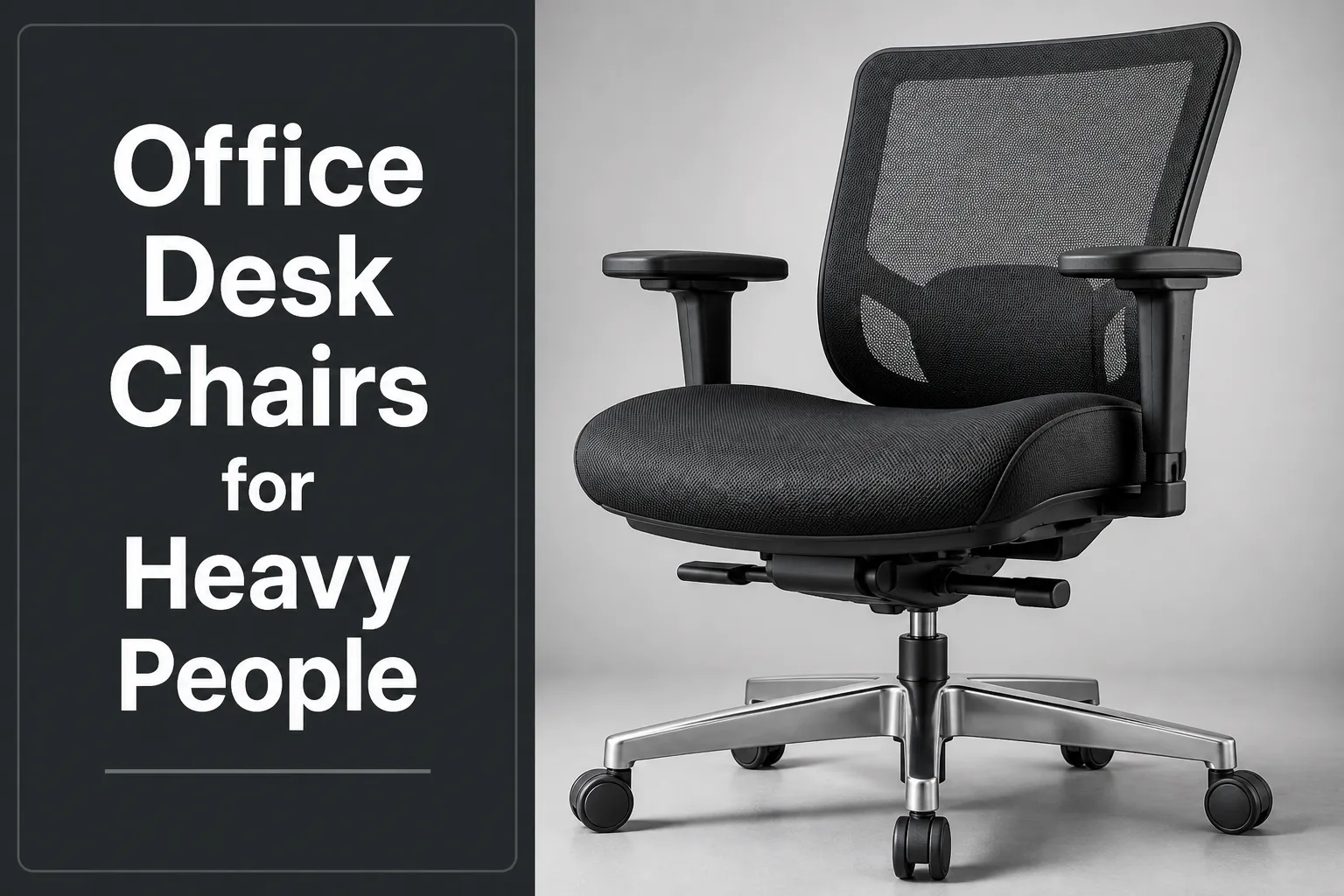
Office Desk Chairs for Heavy People
Last updated: August 5, 2026
Nearly 70% of standard office chairs sold today carry a weight capacity of just 250 pounds, leaving millions of users sitting on equipment never designed for their body type. Office Desk Chairs for Heavy People solve this problem with reinforced frames, wider seats, and gas cylinders built to handle 300 to 500+ pounds without sinking, creaking, or failing. This guide breaks down everything you need to know about weight capacities, key features, budget options, and how to avoid the common mistakes that lead to premature chair failure.
Key Takeaways
- Heavy duty office chairs support 300 to 500+ pounds with reinforced metal bases and wider seat pans
- Standard chairs typically max out at 250 pounds and risk structural failure above that threshold
- A metal five star base, class 4 gas lift, and wide seat pan are the most critical structural features
- Gaming chairs can work for heavy users but often lack the ergonomic support of dedicated office chairs
- Lumbar support and adjustable armrests matter more than thick padding for long term comfort
- Heavy duty chairs last 5 to 10 years with proper care versus 2 to 4 years for standard chairs
- A sinking chair usually means a failing gas cylinder, which costs $20 to $40 to replace
- Quality heavy duty office chairs under $300 exist and do not have to look medical or bulky
What Is a Heavy Duty Office Chair and How Much Weight Can It Hold?
A heavy duty office chair is a seating solution engineered with reinforced components to support users weighing 300 pounds or more. The weight capacity of these chairs ranges from 300 to 500+ pounds, depending on the model and manufacturer.
The key structural differences between heavy duty and standard chairs include:
- Base material: Heavy duty chairs use steel or reinforced aluminum bases instead of plastic
- Gas cylinder class: Class 4 pneumatic cylinders rated for higher loads, compared to class 2 or 3 in standard chairs
- Seat pan width: 20 to 24 inches wide versus the standard 17 to 19 inches
- Seat reinforcement: Steel frame under the seat cushion rather than plastic or thin metal
- Caster wheels: Larger, heavier duty casters (typically 2.5 to 3 inches) rated for more weight
What’s the Difference Between a 300 lb Capacity Chair and a 500 lb Capacity Chair?
The difference between a 300 pound and 500 pound capacity chair comes down to materials, construction, and price. A 300 pound capacity chair typically uses a reinforced nylon base, a class 3 gas cylinder, and a seat width around 20 inches.
A 500 pound capacity chair upgrades to a steel or heavy aluminum base, a class 4 gas cylinder, a 22 to 24 inch seat, and dual reinforcement bars under the seat pan.
The price jump is significant. Most 300 pound capacity chairs cost $150 to $300, while 500 pound capacity models range from $300 to $600. If you weigh under 280 pounds, a 300 pound rated chair provides an adequate safety margin.
If you weigh 280 to 350 pounds, look for a 400 pound rated chair. Above 350 pounds, you need a true 500+ pound capacity chair.
Office Chair Weight Capacity vs Regular Chairs: What’s the Difference?
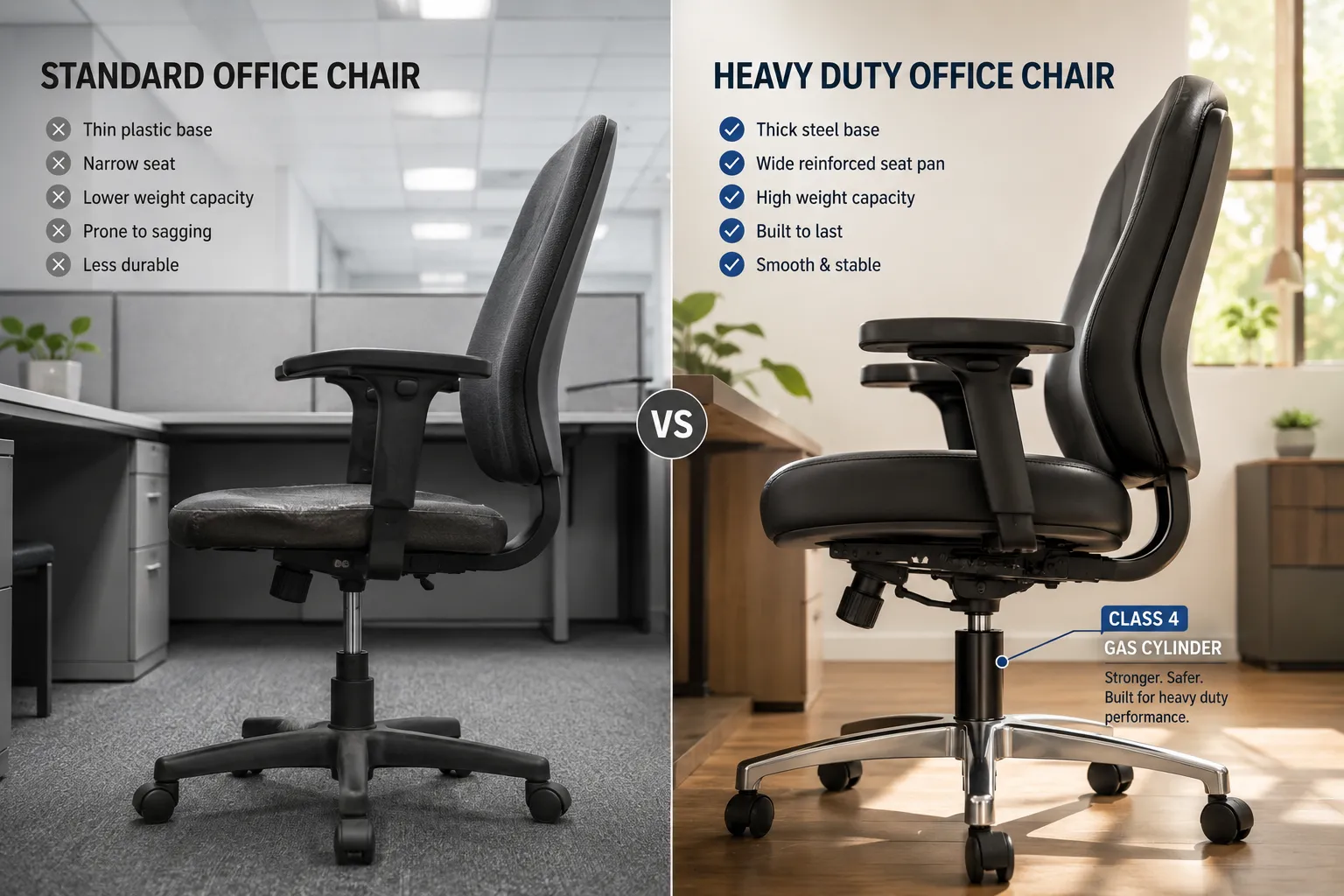
Regular office chairs and heavy duty chairs differ in five critical areas: base material, gas cylinder rating, seat width, weight rating, and warranty coverage. A regular office chair is designed for users up to 250 pounds, while heavy duty models start at 300 pounds and go up to 500 or more.
Here is a quick comparison:
| Feature | Standard Chair | Heavy Duty Chair |
|---|---|---|
| Weight capacity | Up to 250 lbs | 300 to 500+ lbs |
| Base material | Plastic or nylon | Steel or reinforced aluminum |
| Gas cylinder class | Class 2 or 3 | Class 4 |
| Seat width | 17 to 19 inches | 20 to 24 inches |
| Typical warranty | 1 to 2 years | 3 to 5 years (often longer) |
| Price range | $80 to $200 | $150 to $600 |
The weight capacity rating is not a suggestion. It is the maximum load the manufacturer tested the chair to support safely. Exceeding it risks gas cylinder failure, base cracking, and seat frame collapse.
How to Choose the Right Office Chair if You’re a Bigger Person
Choosing the right Office Desk Chairs for Heavy People requires checking five specific features before buying: weight capacity, seat dimensions, base material, lumbar support type, and adjustability range. Skip any of these and you risk buying a chair that fails within months.
Step by Step Selection Guide
- Check the weight capacity first. Add 50 pounds to your body weight as a safety margin. If you weigh 280 pounds, look for chairs rated at 330 pounds or higher.
- Measure your seat width needs. You need at least 2 inches of space on each side of your hips. If you measure 22 inches across at the widest point of your hips, you need a seat at least 20 inches wide.
- Verify the base is metal. Look for “steel base” or “aluminum base” in the product specs. Nylon and plastic bases flex under heavy loads and eventually crack.
- Confirm the gas cylinder class. Class 4 cylinders are rated for heavier loads and last longer. Many manufacturers do not list this, so look for chairs that explicitly mention “class 4 gas lift” or “heavy duty cylinder.”
- Test the lumbar support. Look for adjustable lumbar support that moves up and down, not just fixed curves. Fixed lumbar support hits the wrong spot for many users.
- Check the armrest width. Adjustable armrests that widen are essential for bigger users. Fixed armrests that are too narrow dig into your sides.

Common Mistakes to Avoid
The most common mistake I see is buying based on padding thickness alone. Thick padding compresses over time and offers no structural support. A firm seat with high density foam (density of 30 kg/m3 or higher) performs better long term than a thick, soft cushion that flattens in six months.
Another mistake is ignoring the caster wheel rating. Standard casters are rated for 50 to 75 pounds per wheel. On a five wheel base, that gives you 250 to 375 pounds total. Heavy duty casters are rated 100 pounds per wheel, giving you 500 pounds of total base support.
For more guidance on finding the right fit, check our resource on comfortable office chairs for big people.
Best Office Desk Chairs for Heavy People Under $300
Yes, you can find quality office desk chairs for heavy people under $300 that offer metal bases, class 4 gas cylinders, and decent lumbar support. The trade off is usually in adjustability range and warranty length compared to premium models.
Top Budget Picks for 2026
1. COMHOMA Big and Tall Office Chair (approximately $200 to $250)
- Weight capacity: 400 lbs
- Seat width: 21 inches
- Base: Steel
- Lumbar support: Adjustable height
- Best for: Users 200 to 380 pounds who want a balance of price and support
Our detailed COMHOMA big and tall office chair review covers long term durability and real world comfort testing.
2. Amazon Basics Heavy Duty Chair (approximately $130 to $180)
- Weight capacity: 350 lbs
- Seat width: 20 inches
- Base: Steel
- Lumbar support: Fixed contour
- Best for: Budget conscious users under 320 pounds
3. Flash Furniture Big and Tall Executive Chair (approximately $180 to $280)
- Weight capacity: 500 lbs
- Seat width: 23 inches
- Base: Steel
- Lumbar support: Fixed contour
- Best for: Users 350 to 480 pounds on a budget
What You Give Up Under $300
Budget chairs in this range typically lack:
- Adjustable lumbar support (most offer fixed contours only)
- 4D armrests (most offer 1D or 2D)
- Seat depth adjustment
- Extended warranties (usually 1 to 2 years versus 5 to 12 years on premium chairs)
- Mesh backrests (most use PU leather or fabric)
If you sit for 8+ hours daily, consider stretching your budget to $300 to $400 for better adjustability. See our guide on affordable office chairs for every budget for more options. You can also view deals on Amazon to compare current prices and read verified buyer reviews.
Heavy Duty Office Chairs With Lumbar Support for All Day Comfort
Heavy duty office chairs with lumbar support help maintain spinal alignment during 8+ hour workdays by filling the gap between your lower back and the chair backrest. For heavy users, lumbar support is especially important because extra body weight increases the load on the lumbar spine during prolonged sitting.
Types of Lumbar Support
- Fixed contour lumbar: Molded into the backrest, cannot be adjusted. Works if it happens to fit your spine. Common in budget chairs.
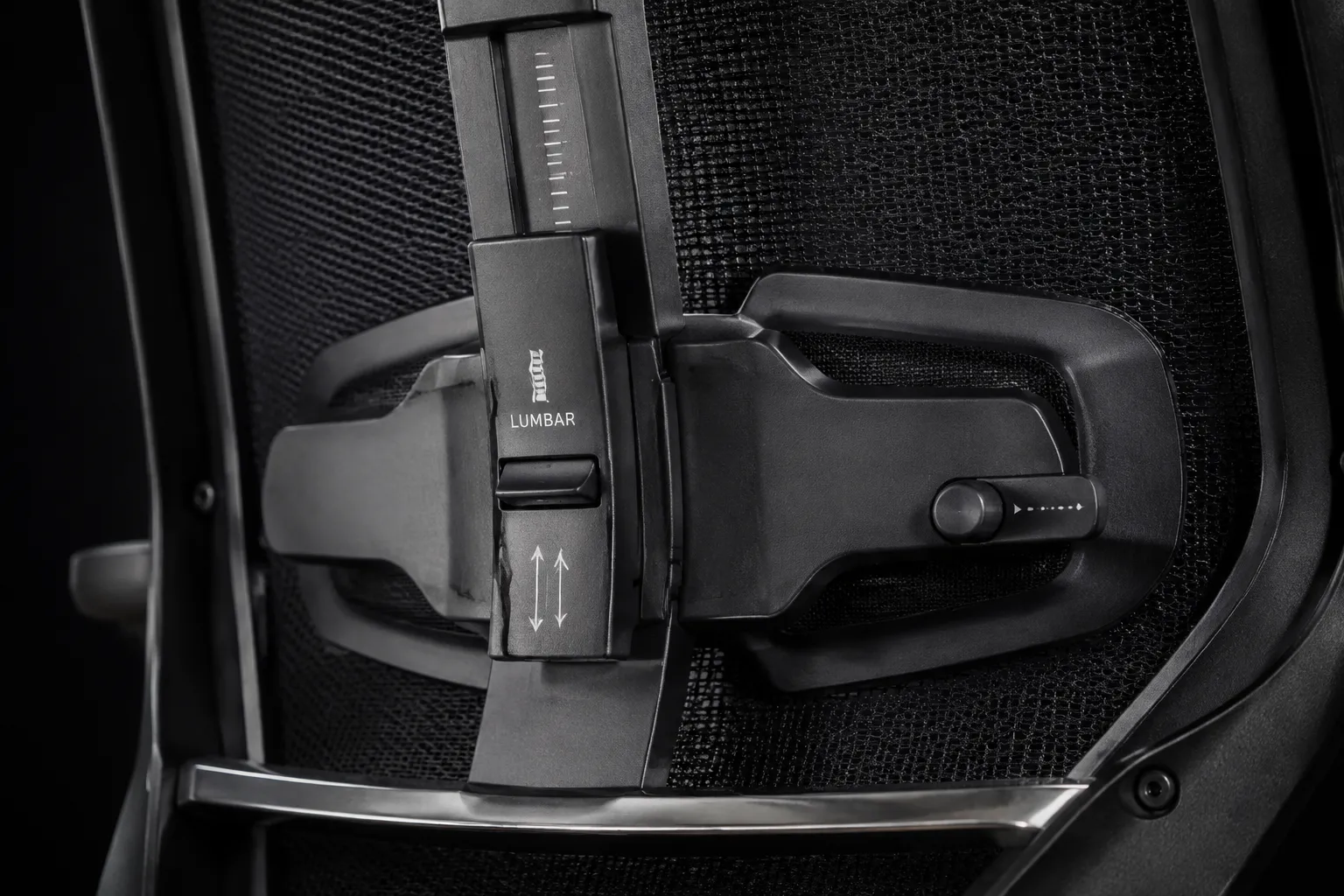
- Height adjustable lumbar: Slides up and down to target different spine heights. Better for users of varying heights.
- Depth adjustable lumbar: Moves in and out to control how firmly it presses against your back. Ideal for heavier users who need more or less pressure.
- Dynamic lumbar: Follows your back as you shift positions. Found in premium chairs like Steelcase Leap and Herman Miller Aeron.
For heavy users, I recommend at minimum a height adjustable lumbar support. Fixed contour supports assume a standard body shape and often miss the mark for bigger frames. If you deal with back pain, our article on relieving office chair back pain offers practical strategies.
All Day Comfort Checklist
For 8+ hour comfort as a heavier user, verify these features:
- Seat pan at least 20 inches wide
- High density foam cushion (not memory foam, which compresses too much under heavy load)
- Breathable backrest material (mesh or perforated leather)
- Adjustable seat height range of at least 4 inches
- Tilt lock with at least 3 positions
- Armrests that adjust in width
What Should I Look for in Armrests and Base for a Heavier Person?
For a heavier person, armrests need to be wide set, padded, and adjustable in at least two directions. The base must be metal (steel or aluminum) with five legs and heavy duty casters rated for 100 pounds per wheel.
Armrest Requirements
Heavy users put more lateral pressure on armrests than standard users. Look for:
- 2D minimum adjustment: Height and width adjustment. This lets you position the armrests to match your shoulder width.
- Metal armrest stems: Plastic stems snap under side pressure. Metal stems last years longer.
- Padded tops: Hard plastic armrests cause elbow pain during long sessions. PU foam or gel padding is ideal.
- Removable option: Some users prefer removing armrests entirely to get closer to the desk. Check if the armrests can be detached.
A common complaint in budget chairs is armrest slippage, where the height adjustment slowly drops during use. This usually means the internal locking mechanism is plastic. Metal locking collars prevent this issue but are typically found only in chairs above $300.
Base Requirements
The base is the single most critical structural component for heavy users. Here is what to check:
- Material: Steel is strongest, followed by reinforced aluminum. Avoid nylon and plastic bases entirely if you weigh over 250 pounds.
- Leg count: Always five legs. Four leg bases are less stable and not rated for heavy use.
- Caster size: 2.5 inch minimum, 3 inch preferred. Larger casters distribute weight better and roll more smoothly.
- Caster material: Polyurethane for carpet, soft rubber for hard floors. Never use hard plastic casters on hard floors as they scratch the surface and reduce stability.
For more on selecting the right chair features, see our guide on choosing a lumbar support chair.
Are Gaming Chairs Good for Heavy People or Should I Get an Office Chair Instead?
Gaming chairs can work for heavy people, but dedicated Office Desk Chairs for Heavy People are generally better for long term ergonomic support. Gaming chairs prioritize aesthetics and recline features over spinal alignment and weight distribution.
Office Chair vs Gaming Chair for Heavy Users
| Factor | Gaming Chair | Office Chair |
|---|---|---|
| Weight capacity | Usually 250 to 300 lbs | 300 to 500+ lbs |
| Seat width | 14 to 17 inches (narrow) | 20 to 24 inches (wide) |
| Lumbar support | Usually a pillow | Adjustable or built in |
| Backrest height | Tall (often with headrest) | Varies by model |
| Recline range | 130 to 180 degrees | 90 to 135 degrees |
| Durability for heavy use | Moderate | High (if rated properly) |
The biggest issue with gaming chairs for heavy users is the narrow seat width. Most gaming chairs measure 14 to 17 inches across, which is too narrow for many bigger users. The side bolsters that look sporty also restrict hip space.
If you want the gaming chair aesthetic but need office chair support, look for “big and tall gaming chairs” from brands like DXRacer and Secretlab, which offer wider seats and higher weight ratings. However, these typically cost $400 to $600, putting them in the same price range as proper ergonomic office chairs.
Office Desk Chairs for Heavy People That Don’t Look Medical or Bulky
Modern heavy duty office chairs are designed to look like standard office furniture, not medical equipment. The key is choosing models with clean lines, mesh backrests, and color options that blend into a professional workspace.
Features That Keep a Chair Looking Sleek
- Mesh backrest: Looks modern and reduces visual bulk compared to high back leather chairs
- Mid back design: Shorter backrests look less imposing than tall executive chairs
- Neutral colors: Black, grey, and white options match any office decor
- Slim armrests: Avoid thick padded armrests that look industrial
- Standard caster size: Oversized casters look medical. Standard 2.5 inch casters look normal.
Several brands now make heavy duty chairs that look identical to standard office chairs. The reinforcement is internal, not visible. For options that combine style and support, browse our office chairs for larger individuals collection.
Do I Need a Reinforced Office Chair or Is Extra Padding Enough?
Extra padding alone is never enough for a heavy user. You need a reinforced chair with a steel base, class 4 gas cylinder, and structural seat pan support. Padding only affects surface comfort, not weight bearing capacity.
Why Padding Isn’t the Answer
Thick padding creates a false sense of support. When you sit on a heavily padded chair, the foam compresses to half its thickness within the first few weeks. After that, you are sitting on the structural components underneath, which in a standard chair are not built for heavy loads.
What actually matters for weight support:
- The base material and design (steel five star base)
- The gas cylinder class (class 4 for heavy use)
- The seat pan frame (steel reinforcement, not plastic)
- The tilt mechanism rating (heavy duty tilt mechanisms handle more torque)
A chair with thin padding but a steel frame will outlast a chair with thick padding and a plastic frame every time. For users who want extra comfort, add a separate seat cushion to a structurally sound chair rather than relying on padding to compensate for weak construction.
How Long Do Heavy Duty Office Chairs Last Compared to Standard Ones?
Heavy duty office chairs last 5 to 10 years with daily use, compared to 2 to 4 years for standard chairs under similar conditions. The lifespan difference comes down to material quality and engineering tolerances.
Factors That Affect Lifespan
- Daily sitting hours: 8 hours per day wears a chair faster than 4 hours
- User weight relative to capacity: Sitting at 90% of capacity wears components faster than sitting at 60%
- Floor surface: Carpet wears casters faster than hard floors
- Maintenance: Tightening bolts every 6 months extends life significantly
- Environment: Humidity and temperature swings affect gas cylinder seals
Total Cost of Ownership Comparison
A $200 standard chair replaced every 3 years costs $67 per year over 9 years. A $400 heavy duty chair lasting 9 years costs $44 per year. The heavy duty chair is cheaper long term and performs better throughout its life.
For more on getting value from your office furniture investment, see our guide on why office chairs are expensive.
Office Chair Keeps Sinking: How Do I Fix It?
A sinking office chair means the gas cylinder has failed and can no longer hold pneumatic pressure. You fix it by replacing the gas cylinder, which costs $20 to $40 and takes 15 to 30 minutes with basic tools.
Why Chairs Sink
The gas cylinder uses compressed air to hold the seat at your chosen height. When the internal seals wear out, air leaks and the seat drops to its lowest position. This happens faster when:
- The user weight exceeds the cylinder rating
- The chair is older than 3 years
- The cylinder was a lower class (class 2 or 3)
How to Replace a Gas Cylinder
- Remove the base: Turn the chair upside down and pull the base off the cylinder. Use a rubber mallet if stuck.
- Remove the old cylinder: Pull the cylinder out of the seat mechanism. It may require tapping with a mallet.
- Install the new cylinder: Insert the new class 4 cylinder into the seat mechanism, then attach the base.
- Test the height: Sit in the chair and use the lever to adjust. It should hold at all heights.
Buy a class 4 replacement cylinder rated for at least 350 pounds, even if your chair originally came with a lower class. This upgrade extends the chair’s lifespan. For heavy users, this is the most common repair and worth doing rather than replacing the entire chair.
Can You Use a Regular Office Chair if You Weigh Over 250 Pounds?
You can physically sit in a regular office chair if you weigh over 250 pounds, but it is not safe or comfortable long term. The chair will wear out faster, the gas cylinder will fail prematurely, and the base may crack under stress.
What Happens When You Exceed the Weight Rating
- Gas cylinder fails within 6 to 18 months instead of lasting 3 to 5 years
- Base develops stress cracks at the leg joints, which can cause sudden collapse
- Seat pan bends or breaks at the attachment points
- Tilt mechanism seizes under excessive torque
- Casters flatten and stop rolling smoothly
The risk is not just discomfort. A base that cracks while you are sitting can cause a fall. If you weigh over 250 pounds, invest in a chair rated for at least 300 pounds. The price difference between a standard chair and a basic heavy duty model is often just $50 to $100.
For more options, check our big and tall office chairs guide.
Conclusion
Office Desk Chairs for Heavy People are not a luxury, they are a safety and comfort necessity. The right chair has a metal base, class 4 gas cylinder, wide seat pan, and adjustable lumbar support.
You can find solid options under $300, and investing in a properly rated chair saves money long term through extended lifespan and fewer replacements.
Actionable Next Steps
- Weigh yourself and add 50 pounds to determine your minimum weight capacity requirement
- Measure your hip width and add 4 inches to determine your minimum seat width
- Set your budget and prioritize structural features (base, cylinder, frame) over cosmetic ones (padding, leather, color)
- Check return policies before buying, as fit is personal and hard to judge online
- View deals on Amazon to compare current prices and read verified buyer reviews
A good chair is an investment in your comfort and productivity. Choose wisely, and your back will thank you for years to come.
FAQ
Is a heavy duty office chair worth the extra cost?
Yes. A heavy duty chair costs $50 to $150 more upfront but lasts 2 to 3 times longer than a standard chair under heavy use, making it cheaper per year of ownership.
What weight capacity do I need if I weigh 300 pounds?
Look for a chair rated at 350 to 400 pounds. This gives you a safety margin and extends the chair’s lifespan by reducing stress on components.
Do heavy duty office chairs come in mesh back designs?
Yes. Many modern heavy duty chairs feature mesh backrests for breathability. Check that the mesh is rated for your weight, as some lightweight mesh stretches under heavy loads.
Can I replace the gas cylinder on a heavy duty chair myself?
Yes. Replacement gas cylinders cost $20 to $40 and install in 15 to 30 minutes with a rubber mallet. No special tools are required.
Are there heavy duty office chairs under $200?
Yes, but options are limited. The Amazon Basics Heavy Duty Chair at around $150 to $180 supports 350 pounds with a steel base, though it lacks adjustable lumbar support.
How wide should the seat be for a heavy person?
The seat should be at least 20 inches wide for users over 250 pounds. Measure your hip width and add 4 inches to find your ideal seat width.
Do I need a headrest on a heavy duty office chair?
A headrest is optional. It helps if you recline frequently or have neck strain, but it is not a weight bearing component and does not affect the chair’s capacity.