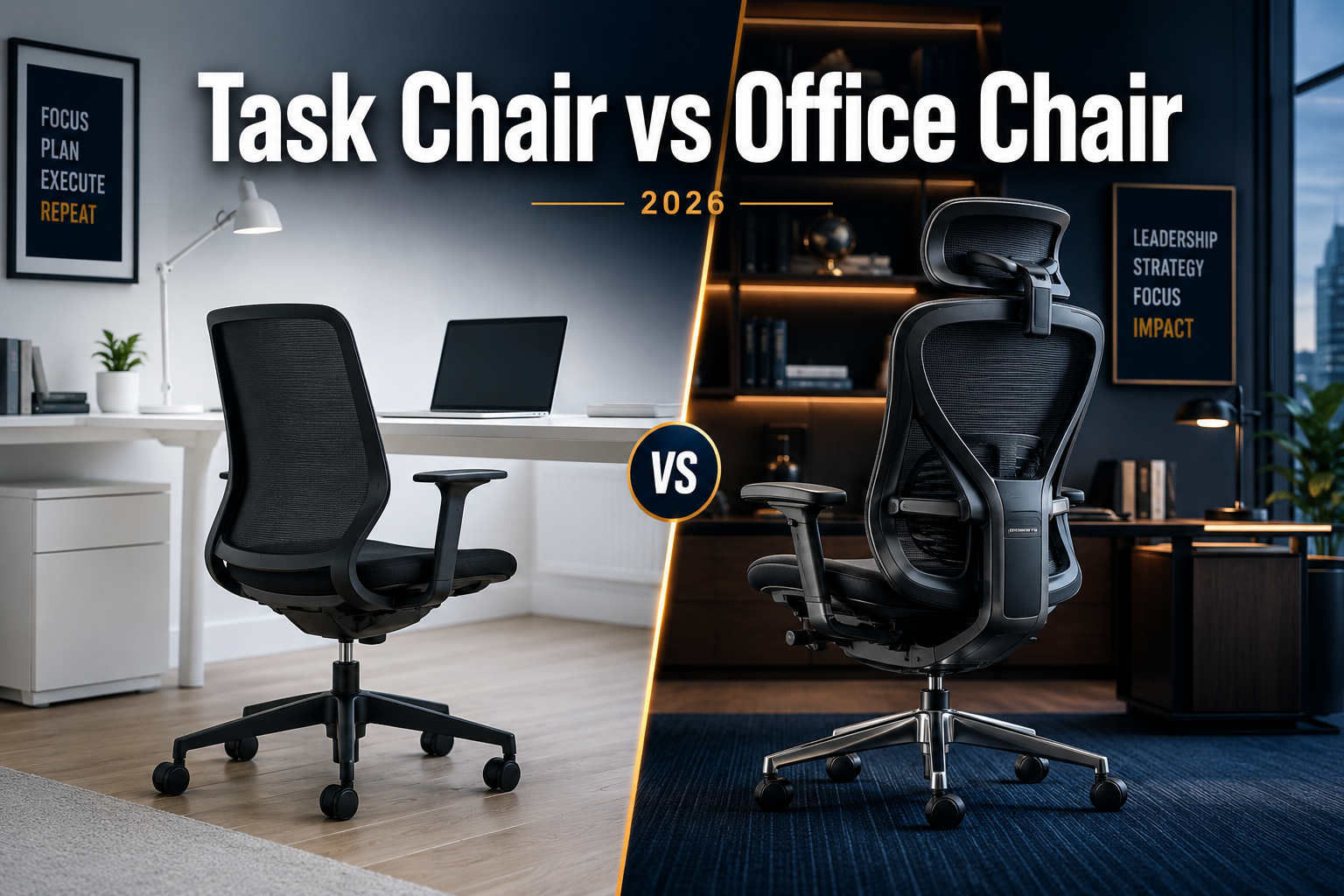
Task Chair vs Office Chair
Lastest update: May 23, 2026
Quick Answer: Task Chair vs Office Chair. A task chair is a lightweight, no-frills seat designed for shorter work sessions of 2–4 hours. An office chair offers a broader range of adjustments, more postural support, and is built for 6–10 hour workdays.
If you sit for most of your working day, an ergonomic office chair is almost always the better investment for your body and long-term productivity.
Key Takeaways
- Task chairs are simpler, lighter, and cheaper, ideal for occasional or short-duration sitting.
- Ergonomic office chairs offer adjustable lumbar support, seat depth, armrests, and tilt tension, essential for full workdays.
- The Task Chair Office Chair decision comes down to how long you sit, not just your budget.
- Quality ergonomic office chairs typically cost $150–$1,500+; decent task chairs run $50–$250.
- Both types should include a five-point swivel base, casters, and gas-lift height adjustment as a minimum.
- People with back pain, sciatica, or posture issues benefit significantly from a proper ergonomic office chair.
- Gaming chairs are not the same as task chairs or ergonomic office chairs, they prioritize aesthetics over biomechanics.
- The biggest buying mistake is choosing based on price alone without considering daily sitting duration.
Compare Top Rated Task Chair Office Chair on Amazon
What’s the Difference Between a Task Chair vs Office Chair?
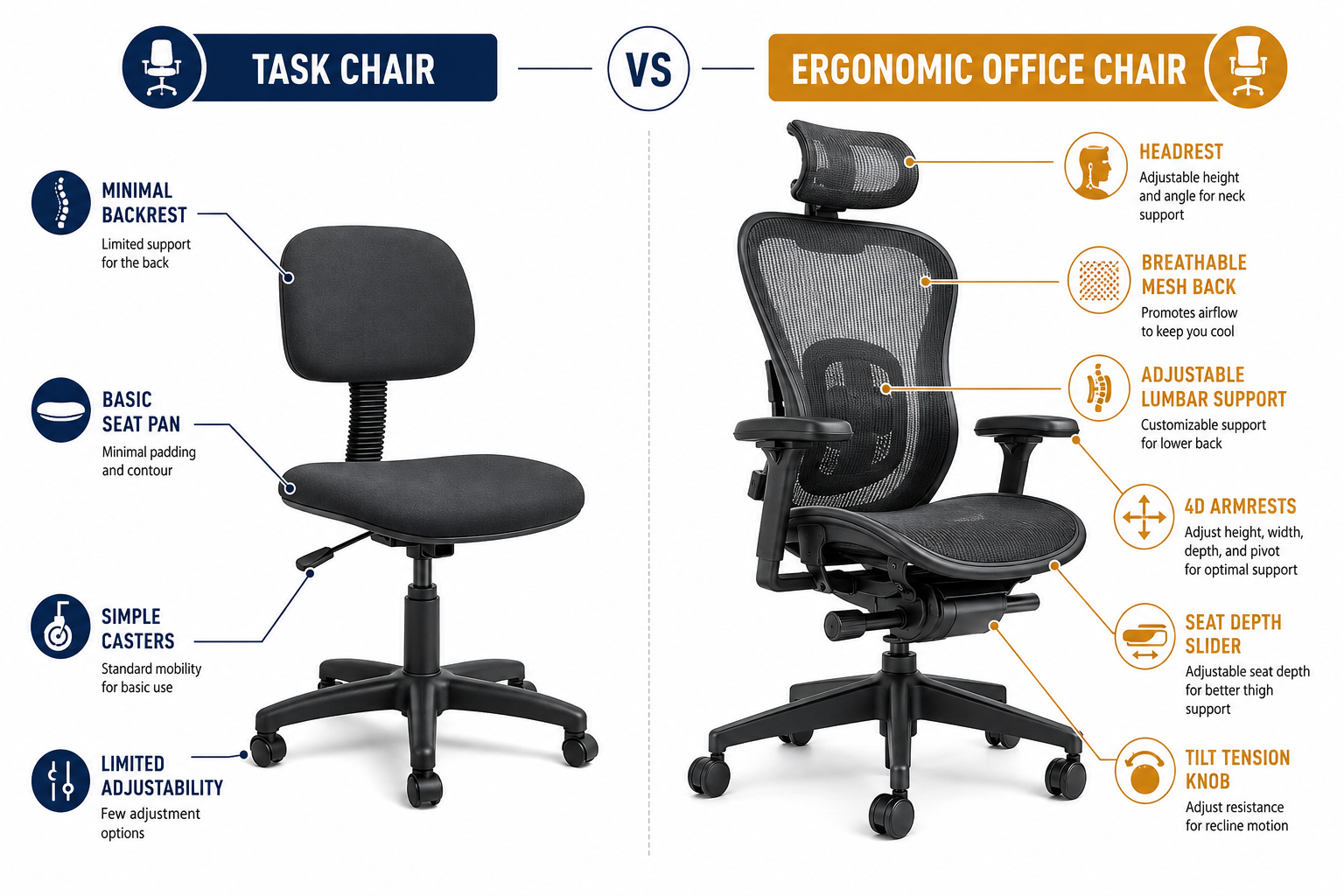
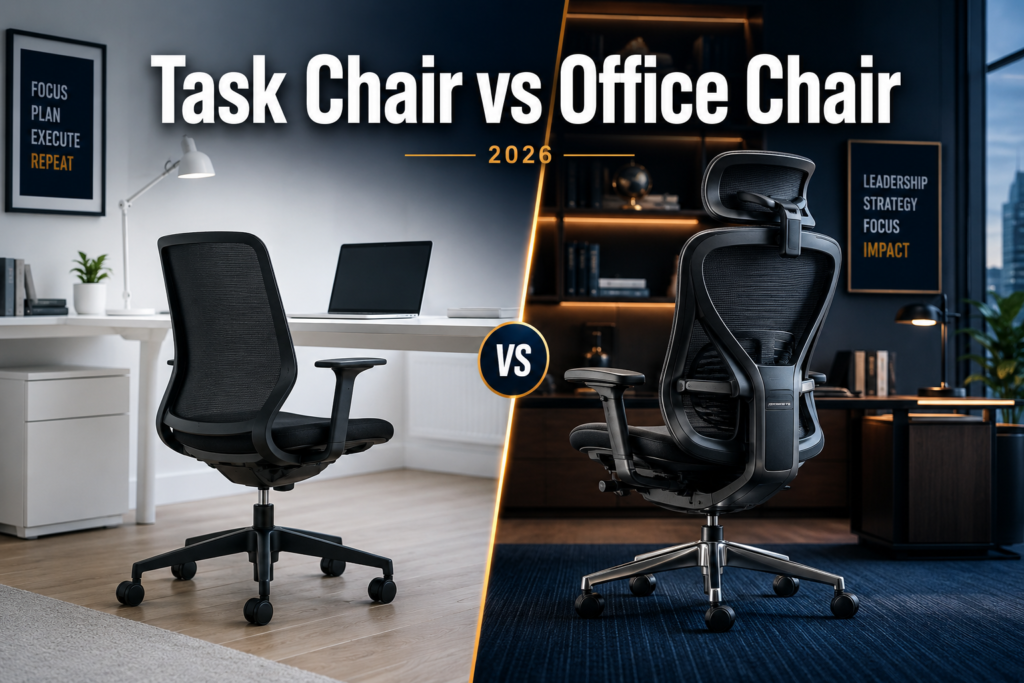
A task chair is a basic, streamlined seat with minimal features, usually a simple backrest, standard seat pan, and basic height adjustment. An office chair (particularly an ergonomic office chair) is a more fully featured seat with adjustable lumbar support, seat depth, armrests, tilt tension, and sometimes a headrest.
The term “office chair” is broad. It covers everything from a $60 basic swivel seat to a $1,500 Steelcase Leap. In practice, when people compare task chairs to office chairs, they usually mean: minimal task seating vs. fully adjustable ergonomic seating.
Here’s a clean breakdown:
| Feature | Task Chair | Ergonomic Office Chair |
|---|---|---|
| Lumbar support | Fixed or none | Adjustable (height + tension) |
| Seat depth adjustment | Rarely | Common |
| Armrest adjustability | Basic or none | 2D to 4D |
| Headrest | No | Often yes |
| Recline/tilt tension | Limited | Full range |
| Typical weight | 15–25 lbs | 25–50 lbs |
| Best for | 2–4 hours/day | 6–10 hours/day |
| Price range | $50–$250 | $150–$1,500+ |
Decision rule: If you sit for more than 4 hours a day, skip the task chair. The ergonomic office chair will pay for itself in reduced discomfort and fewer sick days.
Are Task Chairs More Expensive Than Regular Office Chairs?
No, task chairs are generally cheaper than ergonomic office chairs. Task chairs typically range from $50 to $250, while quality ergonomic office chairs start around $150 and can exceed $1,500 for premium models from brands like Steelcase, Herman Miller, or Humanscale.
That said, the price gap is narrowing. Budget ergonomic chairs under $300 are now a major market segment, and several models in that range offer adjustable lumbar support, tilt tension, and seat depth, features that used to cost much more.
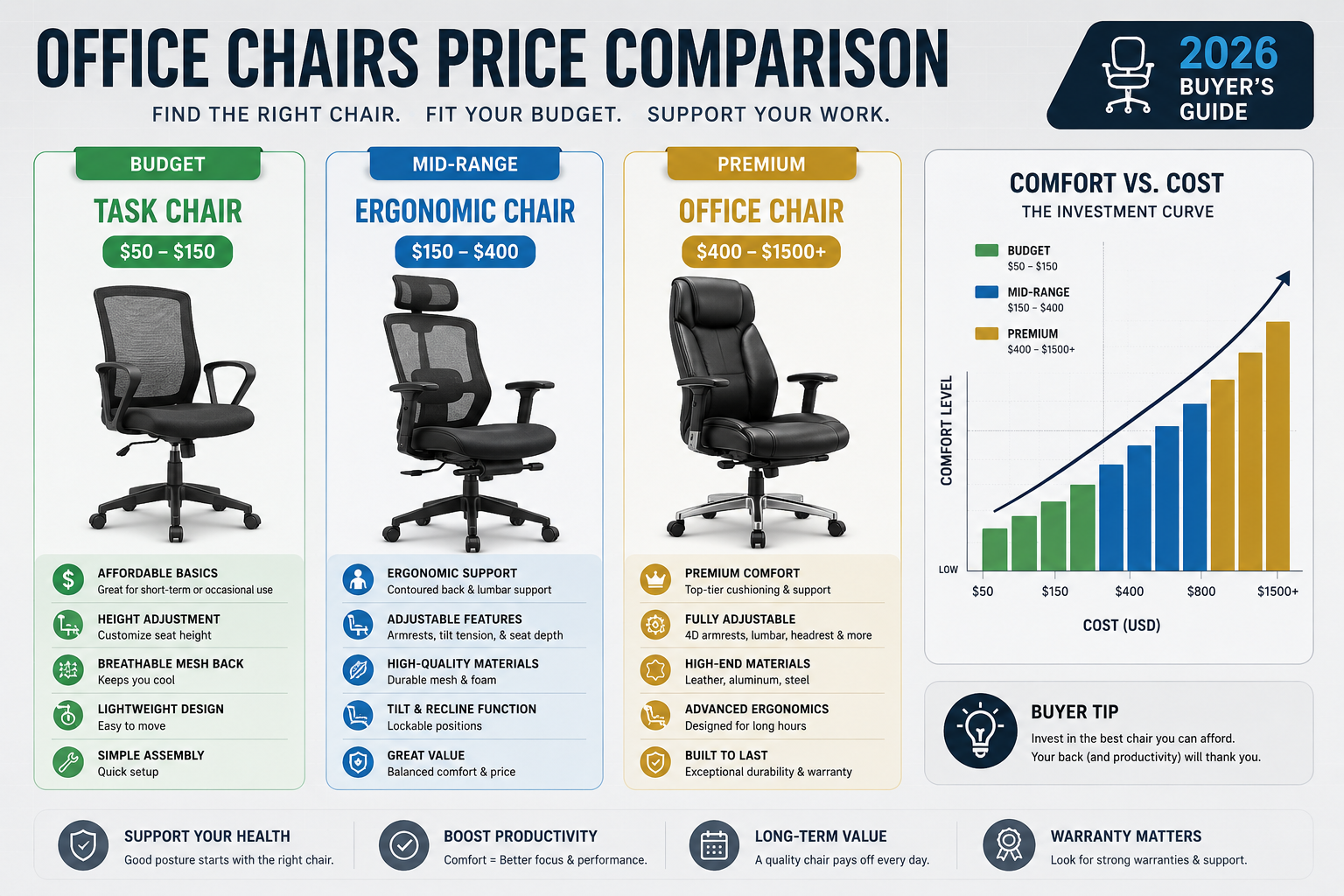
Price tiers to know:
- $50–$150: Basic task chairs. Functional for light use, minimal adjustability.
- $150–$350: Budget ergonomic chairs. Key adjustments included; materials are often mid-grade mesh or foam.
- $350–$700: Mid-range ergonomic office chairs. Better build quality, more adjustment range, longer warranties.
- $700–$1,500+: Premium ergonomic office chairs. Research-backed design, superior materials, often 10–12 year warranties.
If you’re looking for affordable office chairs that don’t sacrifice comfort, there are solid options in the $150–$350 range that genuinely support long work sessions.
Compare Top Rated Task Chair Office Chair on Amazon
Which Chair Is Better for Long Work Hours?
For long work hours, defined as 5+ hours of seated work per day, an ergonomic office chair is clearly better. Task chairs lack the postural support needed to maintain healthy spinal alignment over extended periods, which increases the risk of lower back strain, hip discomfort, and poor posture over time.
According to HBADA’s 2026 buyer’s guide, a chair that genuinely supports long work hours should have at least five adjustments: seat height, seat depth, lumbar tension, backrest tilt, and armrest position. Most task chairs offer only one or two of these.
What long-hour sitting requires from a chair:
- Adjustable lumbar support — keeps the natural curve of your lower spine intact.
- Seat depth adjustment — prevents pressure behind the knees (a common complaint after 3+ hours).
- Tilt tension control — lets you recline slightly to shift pressure off the spine.
- Adjustable armrests — reduces shoulder and neck tension during typing.
- Breathable material — mesh backs reduce heat buildup during long sessions.
For a deeper look at comfortable office chairs built for all-day support, it’s worth comparing models specifically rated for 8-hour use.
Can I Use a Task Chair at Home for My Home Office?
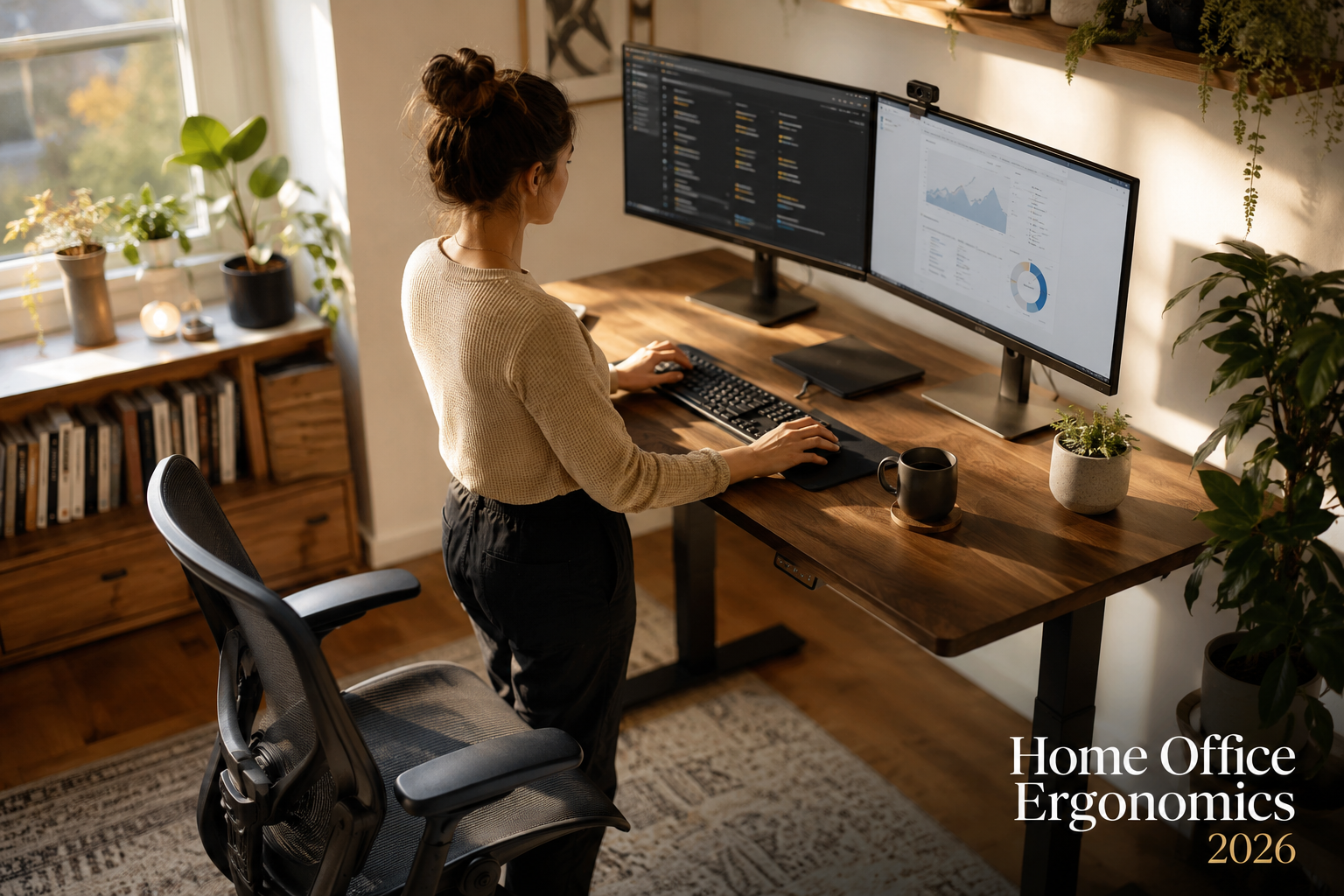
Yes, but with caveats. A task chair works well in a home office if your seated work sessions are short, under 3–4 hours, or if you alternate between sitting and standing throughout the day. For remote workers who sit 6–8 hours daily, a task chair is likely to cause discomfort within weeks.
The remote work boom has made this question more relevant than ever. Many people set up home offices quickly and grabbed whatever chair was available, often a basic task chair or a dining chair. The result has been a measurable rise in reports of lower back pain and neck strain among remote workers.
When a task chair works at home:
- You use a standing desk and only sit for short intervals.
- You’re on a tight budget and plan to upgrade within 6–12 months.
- Your work involves frequent movement (getting up often to take calls, move around, etc.).
When you need an ergonomic office chair at home:
- You sit for 5+ hours daily.
- You’ve experienced back, neck, or hip discomfort from your current setup.
- You work from home full-time with no plans to change.
For home office workers who want ergonomic support without a huge price tag, see our guide to comfortable ergonomic office chairs for better posture.
Compare Top Rated Task Chair vs Office Chair on Amazon
What Makes a Task Chair Ergonomic?
Not all task chairs are ergonomic, but some are designed with ergonomic principles in mind. An ergonomic task chair typically includes adjustable seat height, a contoured backrest that follows the natural lumbar curve, and smooth-rolling casters for easy repositioning.
The key distinction: an ergonomic task chair is still designed for shorter use than a full ergonomic office chair. It applies ergonomic principles to a lighter, simpler frame, but it doesn’t replace the broader adjustment range of a dedicated ergonomic office chair for full-day sitting.
Features that make a task chair ergonomic:
- Contoured seat pan with a waterfall front edge (reduces pressure on thighs).
- Lumbar curve built into the backrest (even if not adjustable).
- Pneumatic height adjustment to match desk height.
- 360-degree swivel for easy repositioning without twisting.
- Casters rated for the floor type (hard floor vs. carpet).
WIRED’s chair-buying guidance notes that greater adjustability generally improves fit because users can tailor the chair to their specific body shape, particularly through adjustable armrests, lumbar support, and recline tension.
Do Task Chairs Help With Back Pain?
A basic task chair offers limited help for back pain. If your back pain is caused by poor lumbar support or prolonged sitting, a task chair without adjustable lumbar support may make things worse, not better.
For people with existing back problems, the research consistently points toward chairs with adjustable lumbar support, proper seat depth, and tilt functionality as the better choice. These features allow the chair to adapt to your body rather than forcing your body to adapt to the chair.
If you have back pain, look for:
- Adjustable lumbar support (height and depth, not just a fixed bump).
- Seat depth adjustment to prevent knee pressure.
- Tilt tension that allows slight recline to decompress the spine.
- Armrests at elbow height to reduce upper back strain.
For practical guidance on relieving office chair back pain, including chair adjustments and movement habits, that’s a strong starting point alongside chair selection.
People with sciatica specifically benefit from chairs with a firm but cushioned seat, adjustable lumbar support, and the ability to tilt slightly forward or back. See our guide to chairs for sciatica relief for model-specific recommendations.
How Do I Know If I Need a Task Chair or a Standard Office Chair?
The clearest signal is how long you sit each day. If you sit for more than 4 hours continuously, you need a proper ergonomic office chair. If you sit for 2–3 hours or less, a quality task chair may be sufficient.
Beyond sitting duration, consider these factors:
Choose a task chair if:
- You sit fewer than 4 hours per day.
- You frequently move between workstations.
- You’re furnishing a shared workspace or conference room.
- Budget is a primary constraint and long-hour sitting isn’t required.
Choose an ergonomic office chair if:
- You sit 5+ hours per day.
- You have existing back, neck, or hip discomfort.
- You work from home full-time.
- You want a chair that supports posture long-term.
- You’re taller or shorter than average (adjustability matters more at body extremes).
Body size also matters. Taller users need chairs with higher backrests and greater seat depth range. Shorter users need lower seat height minimums and shorter seat pans.
See our guides for office chairs for taller workers and office chairs for shorter people for specific recommendations.
What Features Should I Look for in a Good Task Chair?
A good task chair should have, at minimum: pneumatic height adjustment, a five-point swivel base with smooth casters, a contoured backrest with some lumbar support, and a seat pan with a waterfall front edge. Anything beyond that is a bonus.
Must-have features:
- Height adjustment range: Seat height should adjust between 16–21 inches for average-height users.
- Five-point base: Provides stability; avoid chairs with four-point bases.
- Swivel: Full 360-degree rotation for easy repositioning.
- Casters: Match to your floor type (soft wheels for hard floors, hard wheels for carpet).
- Backrest lumbar curve: Even a fixed curve is better than a flat back.
Nice-to-have features:
- Adjustable armrests (even basic up/down).
- Seat tilt adjustment.
- Breathable mesh back.
- Weight capacity rated above your body weight (for durability).
Common mistake: Buying a task chair based on looks alone. A chair that looks sleek but has a flat backrest and no lumbar support will cause discomfort within weeks of daily use.
Compare Top Rated Task Chair vs Office Chair on Amazon
Are Gaming Chairs Different From Task Chairs?
Yes, gaming chairs are a distinct category. Gaming chairs are designed primarily for aesthetics and marketing appeal, they often feature racing-seat styling, bold colors, and high backrests, but their ergonomic credentials are frequently overstated.
Most gaming chairs use a fixed lumbar pillow (often a separate cushion) rather than built-in adjustable lumbar support. They tend to have a bucket-seat shape that pushes the hips forward, which can actually worsen posture during long work sessions.
Gaming chair vs. task chair vs. ergonomic office chair:
| Gaming Chair | Task Chair | Ergonomic Office Chair | |
|---|---|---|---|
| Lumbar support | Pillow (fixed) | Fixed curve or none | Adjustable |
| Seat shape | Bucket/racing | Flat or contoured | Contoured with depth adj. |
| Best use | Gaming sessions | Short work tasks | Full workdays |
| Typical price | $150–$500 | $50–$250 | $150–$1,500+ |
| Ergonomic value | Low–Medium | Low–Medium | High |
If you’re choosing between a gaming chair and a task chair for office work, a quality task chair or budget ergonomic office chair is almost always the better ergonomic choice.
Compare Top Rated Task Chair Office Chairs on Amazon
Are Task Chairs Worth the Extra Money (vs. a Basic Chair)?
Yes, a quality task chair is worth the upgrade over a basic dining chair or no-name swivel seat. Even a $100–$150 task chair with a contoured backrest and proper height adjustment will meaningfully reduce discomfort compared to a chair with no ergonomic features at all.
However, the “worth it” calculation changes when comparing task chairs to ergonomic office chairs. If you’re sitting 6+ hours daily, spending $200 on a task chair and then experiencing back pain that requires physiotherapy visits is a poor trade compared to spending $350–$500 on a proper ergonomic office chair upfront.
The cost-of-health calculation:
- A quality ergonomic office chair: $300–$600 one-time cost.
- A single physiotherapy session for back pain: $80–$150 (and most people need multiple sessions).
- Lost productivity from chronic discomfort: harder to quantify, but real.
Steelcase’s positioning of ergonomic office chairs as tools for “doing best work in better comfort” reflects a broader industry consensus: the right chair is an investment in sustained performance, not just a furniture purchase [2].
For those watching their budget, check out affordable office chairs on clearance, there are often quality ergonomic models available at reduced prices.
How Much Should I Expect to Spend on a Quality Task Chair?
A quality task chair that’s genuinely comfortable for short-to-medium work sessions costs between $100 and $250. Below $100, build quality and lumbar support tend to drop off sharply. Above $250, you’re entering budget ergonomic office chair territory, where the extra spend is better justified by a chair with more adjustability.
Spending guide:
- Under $100: Basic task chairs. Acceptable for very light use; expect limited durability.
- $100–$200: Solid task chairs with contoured backrests, height adjustment, and decent build quality.
- $200–$350: Upper-range task chairs or entry-level ergonomic office chairs. At this price, consider whether a budget ergonomic chair offers better value.
- $350+: You’re in ergonomic office chair territory. The extra investment is worth it if you sit for most of the day.
The global ergonomic office chairs market continues to grow, driven by increasing awareness of workplace wellness and the rise of remote work. This growth is pushing more manufacturers to offer ergonomic features at lower price points, which is good news for buyers in 2026.
What Are Common Mistakes When Buying an Office Chair?
The most common mistake is buying based on price or appearance without considering sitting duration and body fit. A chair that looks premium but lacks proper lumbar adjustment is a poor choice for anyone sitting 6+ hours daily.
Mistakes to avoid:
- Ignoring seat depth: A seat that’s too deep pushes you away from the backrest, eliminating lumbar support.
- Skipping the armrest check: Armrests set too high cause shoulder shrugging; too low causes slouching.
- Buying without testing: If possible, sit in a chair for at least 15–20 minutes before buying.
- Overlooking weight capacity: Chairs used beyond their rated capacity wear out faster and may become unsafe.
- Choosing aesthetics over adjustability: A beautiful chair with no lumbar adjustment will cause problems within weeks of daily use.
- Not accounting for desk height: Your chair height should allow your feet to rest flat on the floor with knees at approximately 90 degrees.
- Assuming “ergonomic” on the label means properly ergonomic: Marketing terms like “ergonomic” are not regulated. Check for specific adjustable features rather than relying on the label.
For a broader look at choosing the right office chair with specific criteria, that guide walks through the full evaluation process.
Compare Top Rated Task Chair Office Chair on Amazon
FAQ: Task Chair vs Office Chair
Q: Can I use a task chair for an 8-hour workday?
A task chair is not designed for 8-hour workdays. Most task chairs lack the lumbar support and seat depth adjustment needed to maintain healthy posture over that duration. For full workdays, an ergonomic office chair is the appropriate choice.
Q: What’s the minimum lumbar support a chair should have?
At minimum, a chair should have a contoured backrest that follows the natural S-curve of the spine. For full-day sitting, adjustable lumbar support — where you can change both the height and depth of the lumbar curve — is the standard to aim for.
Q: Are mesh task chairs better than foam task chairs?
Mesh backs are generally better for longer sitting sessions because they allow airflow, reducing heat buildup. Foam backs can feel more cushioned initially but tend to compress over time and trap heat. For task chairs used in warm environments or for extended periods, mesh is the better material.
Q: Do I need a headrest on my office chair?
A headrest is useful if you frequently recline or if you experience neck tension. For upright working postures, a headrest is optional. If you recline regularly, a headrest prevents neck strain by supporting the head in a neutral position.
Q: How long should a quality office chair last?
A quality ergonomic office chair should last 7–12 years with regular use. Budget task chairs typically last 2–5 years. Warranty length is a reliable proxy for expected lifespan: chairs with 5+ year warranties are generally built to last.
Q: Is a saddle chair a type of task chair?
Saddle chairs are a separate category — they’re designed to promote an open hip angle and active sitting posture. They’re often used in clinical or creative settings. They’re not task chairs in the traditional sense, though they share the “minimal support” philosophy.
Task Chair vs Office Chair: FAQs
Q: Can children use task chairs?
Standard task chairs are sized for adults. Children need chairs with lower seat height minimums and smaller seat pans. Using an adult task chair without proper adjustment can cause poor posture and discomfort in younger users.
Q: What’s the ideal seat height for most adults?
For most adults, a seat height of 17–19 inches allows feet to rest flat on the floor with knees at approximately 90 degrees. Taller users may need 19–22 inches; shorter users may need 15–17 inches.
Q: Do task chairs come with warranties?
Most quality task chairs come with 1–3 year warranties. Ergonomic office chairs from premium brands often carry 10–12 year warranties. The warranty length reflects the manufacturer’s confidence in the chair’s durability.
Q: Is the task chair vs office chair distinction important for shared workspaces?
Yes. In shared workspaces where multiple people use the same chair, broader adjustability is more important, not less. An ergonomic office chair with a wide adjustment range accommodates more body types than a fixed task chair.
Q: Can a good chair improve my productivity?
Discomfort is a documented distraction. When you’re shifting in your seat, stretching to relieve pain, or taking frequent breaks due to physical discomfort, your focus suffers. A chair that fits your body well removes that friction. Whether that translates to measurable productivity gains depends on the individual, but the logic is sound.
Q: What’s the difference between a task chair and an operator chair?
These terms are often used interchangeably. An operator chair typically refers to a task chair designed for computer workstations, often with a mid-back design and basic adjustability. The distinction is largely semantic in modern usage.
Conclusion: Making the Right Choice in 2026
The Task Chair vs Office Chair decision is simpler than it looks once you anchor it to one question: how long do you sit each day?
- Sit fewer than 4 hours? A quality task chair in the $100–$200 range is a reasonable, cost-effective choice.
- Sit 5+ hours? Invest in a proper ergonomic office chair. The adjustment range, lumbar support, and long-term build quality justify the higher price, especially when you factor in the health costs of chronic discomfort.
The global ergonomic chair market is growing precisely because more people are recognizing that seating is not a neutral purchase. The chair you sit in for 2,000+ hours a year shapes your posture, your comfort, and your ability to focus. That’s worth getting right.
Your next steps:
- Calculate your actual daily sitting time for one week.
- Identify your budget range using the price tiers above.
- Prioritize adjustable lumbar support, seat depth, and armrest height in your shortlist.
- If you have specific body size considerations, check size-specific guides before buying.
- Ready to browse? Compare Top Rated Task Chair vs Office Chair on Amazon to find a model that fits your body, your budget, and your workday.
The right chair won’t solve every workplace wellness challenge, but it’s the foundation everything else is built on.
References
[1] Best Office Chairs In 2026 – https://www.officelogixshop.com/blogs/news/best-office-chairs-in-2026
[2] Best Office Chairs – https://www.forbes.com/sites/forbes-personal-shopper/article/best-office-chairs/
[3] Ergonomic Office Chairs Global Market Report – https://www.thebusinessresearchcompany.com/report/ergonomic-office-chairs-global-market-report
[4] Ergonomic Chair Market Report – https://www.researchandmarkets.com/reports/6035227/ergonomic-chair-market-report
[5] Best Office Chair Reviews – https://www.btod.com/blog/best-office-chair-reviews/
Compare Top Rated Task Chairs Office Chairs on Amazon