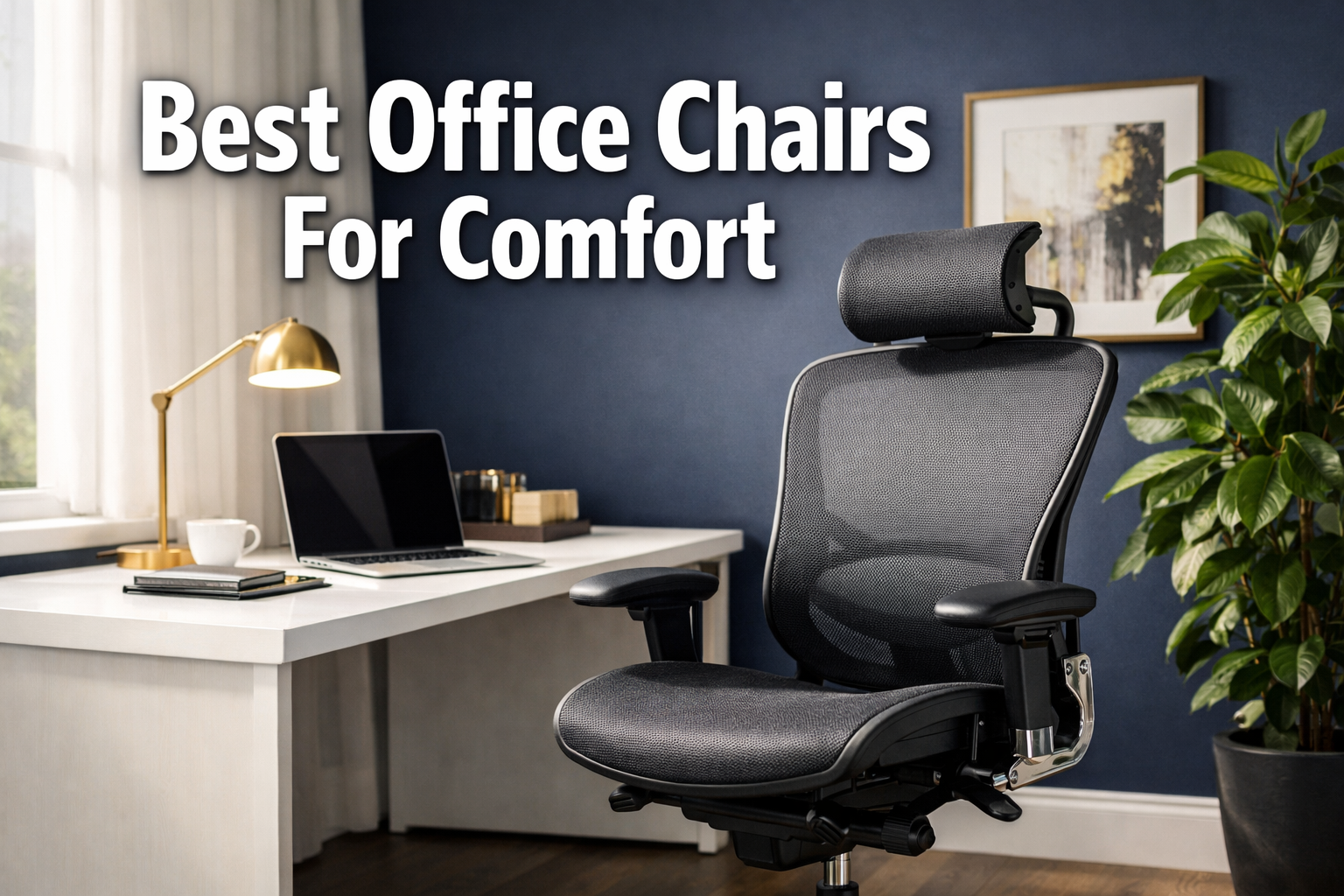
Best Office Chairs for Long Hours and Back Pain
Latest Update: September 11, 2026
If you sit for eight or more hours a day and your lower back keeps reminding you of it, you have almost certainly cycled through the cheap fixes already: the impulse buy, the big-box “task chair,” the pillow you wedged behind your spine. This Best Office Chairs for Long Hours and Back Pain guide does two things the typical roundup skips. First, it hands you a buying framework so you can judge any chair, not just the ones we name. Then it gives you tested picks across every budget from $289 to $2,585, followed by a fit guide, a setup walkthrough and an expanded FAQ.
Because this touches your health, one honest caveat up front. According to the Mayo Clinic, proper office ergonomics can help you avoid some seated-work problems such as neck and back pain — but a chair is one input, not a cure.
Peer-reviewed work is even more sober: a 2023 study in Ergonomics found that lumbar-support and seat-pan-tilt designs produced the most neutral posture yet did not eliminate sitting-induced pain for a large share of participants.
So choose well, set the chair up correctly, and if pain persists, see a clinician. With that framing, let’s get practical.
How to Choose an Office Chair for Back Pain (Read This First)
Before you look at a single product, learn the five features that actually separate a chair that supports you from one that just looks expensive. Master these and you can evaluate anything on the market.
1. Lumbar support — adjustable beats fixed
Your lower spine curves inward, and a good chair supports that curve instead of letting you slump. OSHA’s workstation guidance and Mayo Clinic both point the same way: support should match your lower-back curve and stay adjustable. Fixed lumbar bumps work for average bodies and actively hurt everyone else — which is exactly the complaint real readers leave on roundup pages. Prioritise height- and depth-adjustable lumbar if your torso is long, short, or pain-prone.
2. Seat depth (and a seat slider)
If the seat pan is too deep, its front edge presses your calves and you lose thigh support; too shallow and your legs dangle. A seat-depth slider lets you set two to three fingers of clearance behind your knees. Taller and shorter users should treat this as non-negotiable.
3. Tilt and recline mechanism
Movement matters more than any single “correct” posture. Look for a synchro-tilt or LiveBack-style mechanism and, ideally, a back-tilt limiter so you can lock a recline range. Chairs that let you rock and shift keep blood moving and reduce static loading.
4. Armrests that actually adjust
Aim for elbows at roughly 90° with shoulders relaxed. Four-way (height, depth, width, pivot) arms let most bodies hit that line; fixed or height-only arms often force rolled-in shoulders.
5. Build quality and warranty
Commercial-grade frames, high-density foam and metal bases are why premium brands offer 12-year warranties. Cheap chairs fail in 18–24 months because they use stamped steel, low-density foam and plastic. Warranty length is a reliable proxy for build.
Quick Comparison: 7 Tested Chairs at a Glance
| Chair | Best for | 2026 price | Weight cap. | Warranty | Returns |
|---|---|---|---|---|---|
| Colamy Atlas | Best under $300 | $289 | 300 lb | 3 yr | 30-day free |
| Eurotech Vera | Best support under $500 | $437 | 275 lb | Lifetime/5 yr | 60-day free |
| Refurb Steelcase Leap V2 | Best for most people | $662–$726 | 400 lb | 12 yr | 60-day free |
| Libernovo Omni | Softest sit | ~$803 | 300 lb | 2 yr elec / 5 yr frame | 30-day (split ship) |
| Haworth Fern | Best premium under $1,500 | $1,520 | 325–350 lb | 12 yr | 30-day free |
| Anthros | Serious back pain | $1,949 | 300 lb | 12 yr | 60-day free |
| Herman Miller Aeron Remastered | Best mesh ever | $1,620–$2,585 | 300–350 lb | 12 yr | 30-day + $99 ship |
Pricing is for reference and shifts frequently — confirm before buying.
The Picks
1. Colamy Atlas — Best Office Chair Under $300
~$289. The Atlas is where I’d start anyone escaping cheap-chair territory. It punches above its price with a genuine seat-depth slider, a one-piece aluminium-alloy base (not a wobbly six-piece steel base), real lumbar adjustment and a fully articulating headrest. The firmer cushion holds up over long days. The trade-offs: the arm pads shift a little too easily and the seat runs firm. For a first “real” ergonomic chair under $300, nothing else clears the bar.
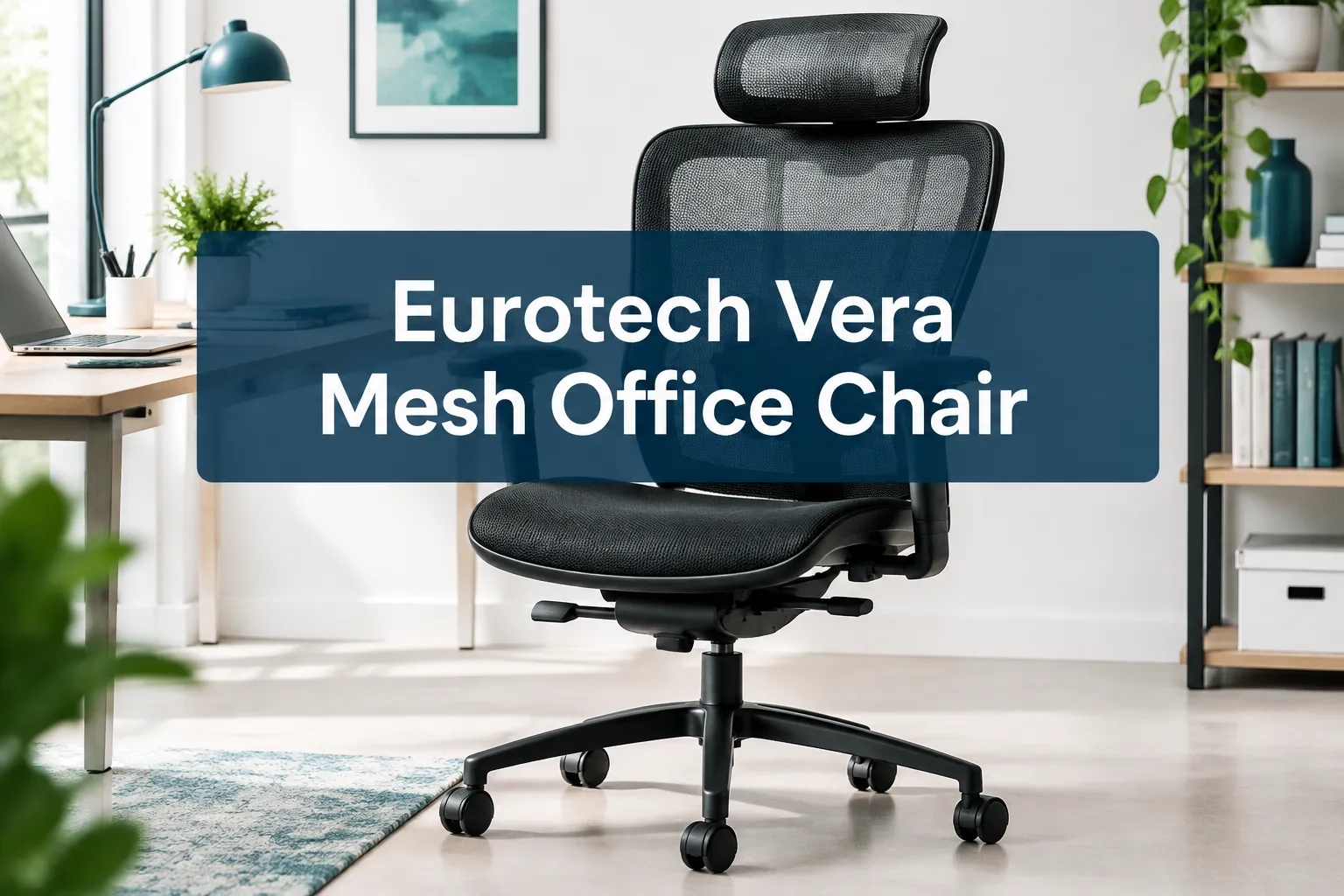
2. Eurotech Vera — Best Back Support Under $500
~$437. A clear comfort step up. The Vera’s hammock-shaped backrest is so well contoured that its lack of adjustable lumbar rarely matters for average builds, and the thick seat pad lets you sink in rather than perch. You get four-way arms and a seat slider. Firmer arm pads and non-adjustable lumbar are the compromises. This is the best sub-$500 pick for long hours — and note “best office chairs under 500” is a low-difficulty search term, so it’s worth calling out for shoppers on that budget.
3. Refurbished Steelcase Leap V2 — Best for Most People
$662–$726. After testing 200-plus chairs, this is the one I recommend most and would choose for myself. The Leap V2 pairs a flexible seat pan, LiveBack backrest, one of the best lumbar systems in the business and a back-tilt limiter, and it fits 5’2″ to 6’4″ — a wider range than almost anything tested. New Leaps run ~$1,400; buying refurbished delivers the same features, full 12-year warranty and a 60-day return for roughly 60% less. The only catch is that it’s refurbished, not new — and a properly rebuilt Leap (new foam, arm pads, cylinder, casters) is frequently better than a new discount-brand chair.
4. Libernovo Omni — Softest Sitting Experience
~$803. The Omni delivers the softest seat back and headrest in the category without sacrificing support, plus a headrest that genuinely fits real necks and wide, well-adjusting arms. Two flags: the lumbar is electronic (a longer-term durability question, though a manual version is in the works), and the seat pan runs short for users 6’2″ and up. Under that height and after a soft-but-supportive sit, this is the pick.
5. Haworth Fern — Best Premium Pick Under $1,500
~$1,520. The digital-knit backrest gives a soft, pillowy, hammock feel that upgrades back contact noticeably, and it includes a back-tilt limiter. Skip the headrest — it pushes your head forward. Add the lumbar option if you want strong lower-back support, and note that taller users see a gap open between backrest and seat at full seat extension.
Bonus 1. Anthros — Best for Serious Back Pain
~$1,949. Highly specialised, which is the point. Its back splits into independently adjustable upper and lower sections for exceptional lower-back support, and the seat’s twin sit-bone cutouts relieve pressure most chairs ignore. Two buyers benefit: those staying ahead of long-hours strain, and those who’ve tried everything and still hurt. It takes patience to dial in and it’s premium-priced.
Bonus 2. Herman Miller Aeron Remastered — Best Mesh Chair Ever
$1,620–$2,585. The original mesh chair every rival imitates. Harmonic tilt gives the best rocking motion I’ve tested, PostureFit delivers targeted support, and the arm pads are the most comfortable I’ve used. Know the constraints: three fixed frame sizes (A/B/C) you must fit, no seat-depth adjustment, and arm width that pivots but doesn’t slide.
Which Chair Fits Your Body?
The original roundups rarely consolidate this, so here it is in one place.
Petite sitters (under 5’4″)
Prioritise short seat pans and low minimum seat heights. The Leap V2 reaches down to 5’2″; the Aeron A-frame suits smaller frames. Avoid deep-pan chairs without a slider.
Tall sitters (6’2″+)
Skip the Libernovo Omni (short pan). Choose the Aeron Remastered Size C, or the Leap V2 up to 6’4″. With the Haworth Fern, expect the backrest-to-seat gap noted above.
Heavier and plus-size sitters (300 lb+)
The Leap V2 supports 400 lb — the highest here — and its wide fit range and adjustable everything make it the safest bet. The Aeron C and Haworth Fern (up to 350 lb) are strong alternatives. If you want a softer, more cushioned sit rather than firm mesh, lean toward the Leap V2 or Anthros.
“I hate the lumbar curve”
Some people find aggressive fixed lumbar genuinely painful. You have two moves: choose a chair with adjustable-depth lumbar you can back off (Leap V2), or choose a well-contoured backrest without a hard bump (Eurotech Vera). Avoid fixed, protruding lumbar systems entirely.
How to Set Up Your New Chair (5 Steps)
A great chair set up wrong still hurts. Research shows configuration — not just the chair — drives posture outcomes, so spend ten minutes here.
- Set seat height so feet rest flat and thighs are parallel to the floor (use a footrest if needed) — the core Mayo Clinic recommendation.
- Set seat depth to leave two to three fingers between the seat edge and the back of your knees.
- Set lumbar height so support meets the inward curve of your lower back, not your ribs.
- Set armrests so elbows sit near 90° with relaxed shoulders.
- Unlock tilt and move. Recline periodically and shift position; if pain builds despite a good setup, stop adjusting and get professional advice.
Is a Premium Chair Actually Worth It?
Run the cost-per-year math. A $150 chair that dies in 18 months costs ~$100/year and offers little support. A $662 refurbished Leap V2 rated for a 25-year commercial frame lifespan costs roughly $54/year across a 12-year warranty — cheaper per year and supportive the whole time. For anyone sitting 8+ hours daily, the premium tier is usually the frugal choice, not the indulgent one.
Best Office Chairs for Back Pain & Long Hours: FAQs
How long should a quality office chair last?
Ten to 15 years with daily use for commercial-grade builds — the reason Steelcase, Haworth and Herman Miller offer 12-year warranties. Cheap chairs typically fail in 18–24 months.
Is mesh or foam better for back pain?
Neither wins outright. Mesh (Aeron) breathes and flexes; contoured foam (Leap V2, Vera) offers a softer, warmer sit. Choose by climate and preference, then insist on adjustable support either way.
What’s the best chair for sciatica or tailbone pain?
Look for seat-pan pressure relief. The Anthros’s sit-bone cutouts target this directly; any chair with a waterfall seat edge and good depth adjustment helps. Persistent nerve pain warrants a clinician, not just a chair swap.
Is spending over $500 worth it?
For 8+ hour sitters, yes — see the cost-per-year math above. The refurbished Leap V2 is the value sweet spot.
Can I trust a refurbished chair?
A properly refurbished Leap V2 ships with new foam, arm pads, cylinder, casters and reupholstery, plus the full 12-year warranty. Its frame is engineered for 25 years of commercial use, so a rebuilt one has decades left.
Chair upgrade or standing desk — which first?
Fix the chair first, then add movement. Ergonomics guidance stresses posture change; a supportive chair plus periodic standing beats either alone.
Bottom Line
Best Office Chairs for Back Pain & Long Hours. For most people, the refurbished Steelcase Leap V2 wins on comfort, fit range and value.
Want the softest sit? The Libernovo Omni. Serious back pain?
The Anthros. But the real takeaway is the framework: match lumbar type, seat depth, tilt, armrests and build quality to your body and budget, set the chair up properly, and stop replacing a failing chair every 18 months.
Resources:
Mayo Clinic — Office ergonomics how-to guide: https://www.mayoclinic.org/healthy-lifestyle/adult-health/in-depth/office-ergonomics/art-20046169 (retrieved)
OSHA — Computer Workstations eTool, Chairs: https://www.osha.gov/etools/computer-workstations/components/chairs (referenced by retrieved Mayo/industry pages; URL itself unverified in this session)
Ergonomics (2023), De Carvalho et al., chair design vs. lumbar posture and pain — PubMed: https://pubmed.ncbi.nlm.nih.gov/36437777/ (retrieved)
NCBI/PMC — lumbar support pillow, posture and comfort study: https://www.ncbi.nlm.nih.gov/pmc/articles/PMC3766244/ (retrieved)
Mayo Clinic Health System — home workspace setup tips: https://www.mayoclinichealthsystem.org/hometown-health/speaking-of-health/5-tips-for-setting-up-your-home-workspace (retrieved)